
 EN
EN
EU's Landmark Packaging Regulation Begins Applying in August 2026: What the PPWR Means for Thermoformed Food Packaging
BRUSSELS — The most comprehensive overhaul of packaging rules in the European Union's history is now in effect. The Packaging and Packaging Waste Regulation (Regulation (EU) 2025/40, known as the PPWR), which entered into force on 11 February 2025, begins its general application from 12 August 2026 across all EU member states — and its requirements will ripple through the global thermoforming supply chain far beyond Europe's borders.
What changes now
Three provisions take immediate effect. First, food-contact packaging placed on the EU market must not exceed specified limits for per- and polyfluoroalkyl substances (PFAS), effectively banning the "forever chemicals" from food packaging. Second, a harmonized recyclability framework replaces the patchwork of national rules, with the goal that all packaging be recyclable by 2030. Third, recycled plastics intended for food-contact applications must comply with the authorized recycling-process regime under Regulation (EU) 2022/1616.
The regulation also locks in mandatory recycled-content targets: 30% recycled content for contact-sensitive PET beverage packaging and 10% for contact-sensitive non-PET plastics by 2030, rising to as much as 65% by 2040 depending on packaging category.
The rPET squeeze
For thermoforming converters, the practical pressure point is material. Demand for food-grade recycled PET (rPET) is set to outpace supply as every brand owner chases the same 30% target, and rPET already commands a persistent price premium over virgin resin. Converters serving EU customers are being asked to qualify rPET sheet sources now — a task complicated by the fact that recycled sheet behaves differently on the production line.
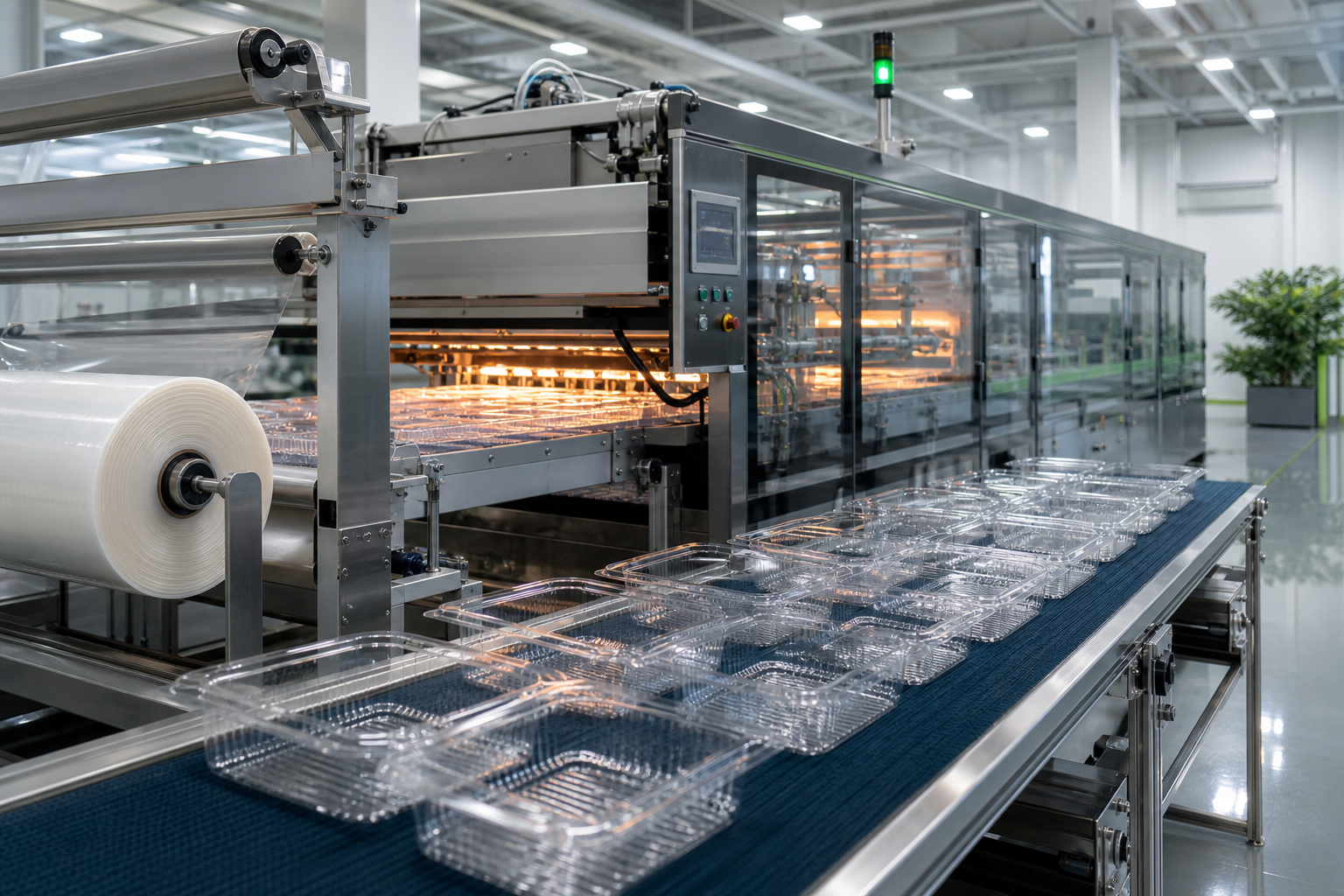
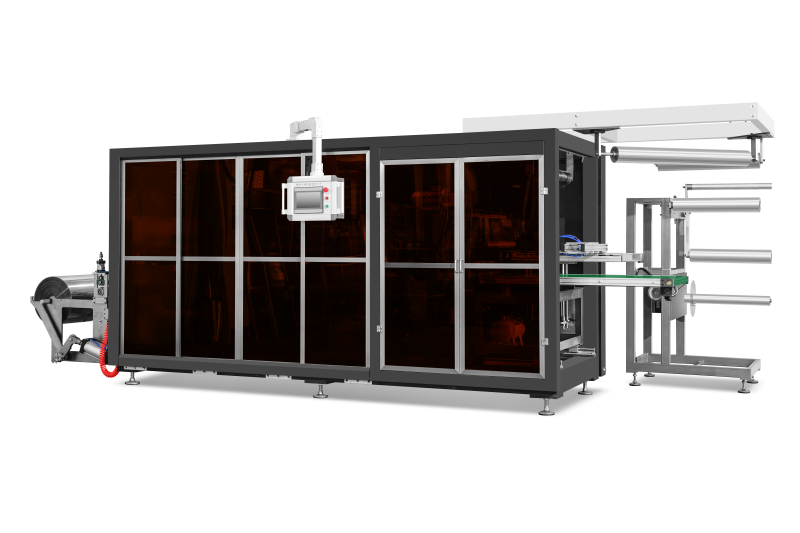
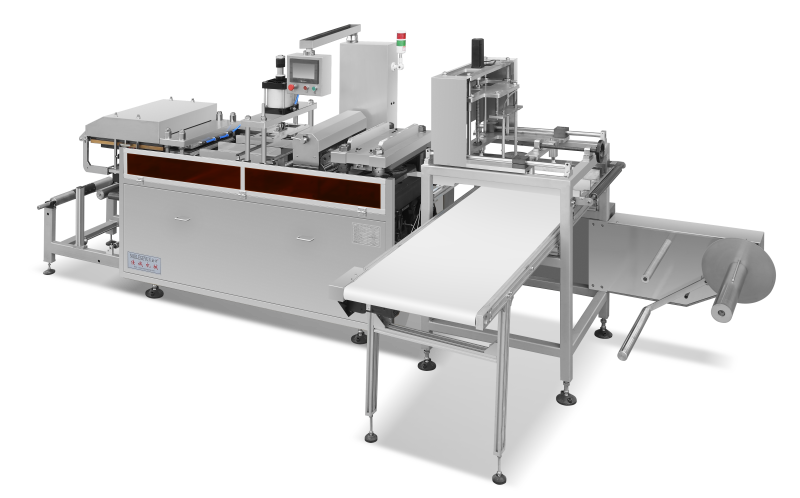
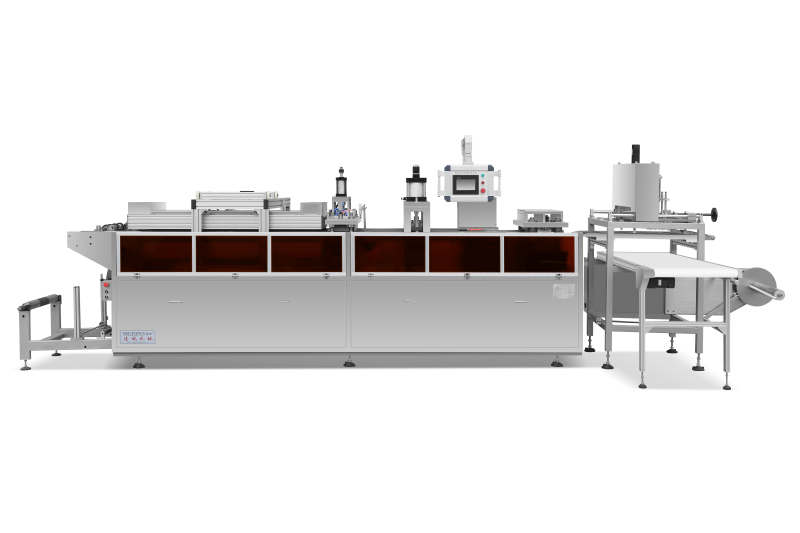
rPET's intrinsic viscosity varies more between batches than virgin PET, and its thermal processing window is narrower. Sheet that runs flawlessly at one oven setting can crystallize unevenly or sag the next. Industry engineers point out that consistent output with high-recycled-content sheet demands precise multi-zone heating, closed-loop temperature control and stable forming pressure — capabilities that older hydraulic-era machines often lack.
What this means for equipment buyers
The compliance deadline is acting as a modernization catalyst. Packaging producers investing in new thermoforming capacity are increasingly specifying: precision infrared or ceramic heating with zone-level control; process monitoring capable of logging batch-level traceability data; and documented material trials with rPET and PP recyclate as part of machine acceptance.
For exporters of thermoformed cups, lids and trays into the EU, the message from Brussels is unambiguous: sustainability claims must now be backed by auditable, regulated substance flows. The converters that treat 2026 as the finish line will face recurring retrofits; those treating it as a baseline are already quoting the 2030 targets.