
 EN
EN
In the manufacturing of disposable heating products, the reliability of the Exothermic Reaction is the single most critical determinant of product success and consumer safety. For quality assurance teams and R&D departments, establishing a rigorous framework for Quality Testing is not merely a regulatory requirement but a fundamental operational necessity. However, accurate Lab Testing results are only as reliable as the consistency of the samples being tested. Variations in packaging structure, tray dimensions, or material thickness can significantly skew temperature curves, leading to false negatives or inconsistent data. Therefore, integrating precise sample preparation into the testing protocol is essential. This article explores standardized methods for evaluating the Exothermic Reaction, emphasizing how stable manufacturing processes, particularly those involving high-precision thermoforming, underpin the integrity of Quality Testing. By ensuring that every sample used in Lab Testing is structurally identical, manufacturers can achieve reproducible results, facilitating more effective process control and product optimization.
Understanding the Mechanics of the Exothermic Reaction
The core functionality of a warm pad relies on the oxidation of iron powder, a process that releases heat. To accurately assess this Exothermic Reaction, engineers must monitor several key parameters: peak temperature, time to reach peak temperature, duration of effective heating, and the overall temperature curve. These metrics define the product's performance profile. However, the reaction is highly sensitive to environmental factors and physical constraints. Oxygen permeability, moisture content, and the physical space available for the powder to expand all influence the rate and intensity of the heat generation.
Consequently, Quality Testing must isolate these variables to provide meaningful data. If the packaging structure varies between samples—for instance, if one tray is slightly deeper than another—the air volume within the package changes, altering the oxygen supply and thus the Exothermic Reaction. This makes it imperative that the physical components of the warm pad, such as the inner tray and outer shell, are produced with extreme consistency. Without this structural uniformity, Lab Testing becomes an exercise in measuring packaging variance rather than chemical performance, rendering the data useless for process improvement.
Standardizing Lab Testing Protocols and Environments
Effective Quality Testing requires a controlled environment to eliminate external interference. Lab Testing should be conducted in a room with stabilized temperature and humidity, typically at 23°C ± 2°C and 50% ± 5% relative humidity, as per international standards. Deviations in ambient conditions can accelerate or retard the Exothermic Reaction, leading to inaccurate comparisons between batches. Furthermore, the placement of temperature sensors must be standardized. Sensors should be placed at the geometric center of the warm pad to capture the core temperature, avoiding edge effects where heat dissipation is faster.
Data logging equipment must have a high sampling rate to capture the rapid initial rise in temperature characteristic of the Exothermic Reaction. A standard protocol might involve recording temperatures every second for the first ten minutes, then every minute thereafter until the pad cools to ambient temperature. This detailed data set allows engineers to analyze not just the peak heat, but the stability of the Exothermic Reaction over time. However, even with perfect instrumentation, if the sample itself is flawed due to inconsistent manufacturing, the Lab Testing results will be misleading. Thus, the integrity of the test begins long before the sensor is attached; it begins with the production of the sample components.
The Critical Role of Sample Preparation Consistency
One of the most overlooked aspects of Quality Testing is sample preparation. In many facilities, prototypes or test samples are hand-assembled or produced using low-precision tooling. This introduces significant variability. A warped tray, uneven seal, or inconsistent wall thickness can create air pockets or restrict oxygen flow, artificially suppressing or enhancing the Exothermic Reaction. To ensure that Lab Testing reflects the true potential of the formula, the physical housing of the reactants must be identical across all samples.
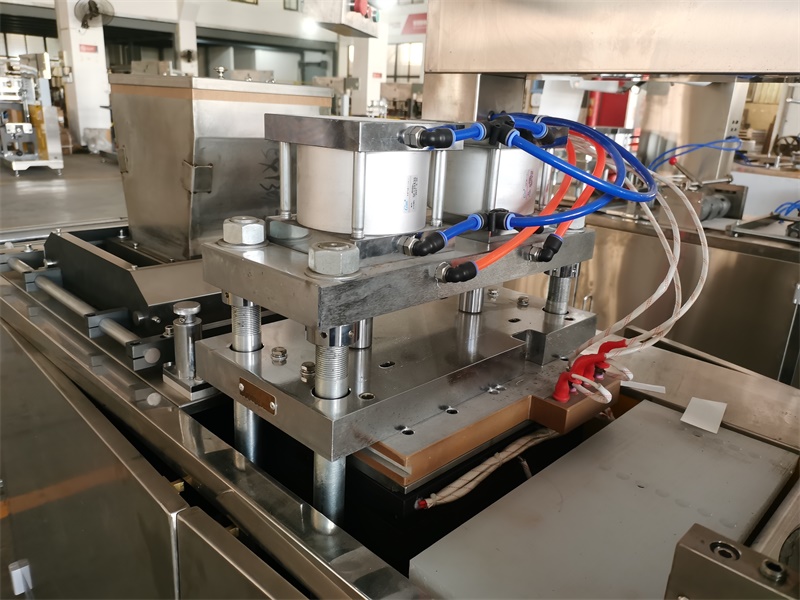
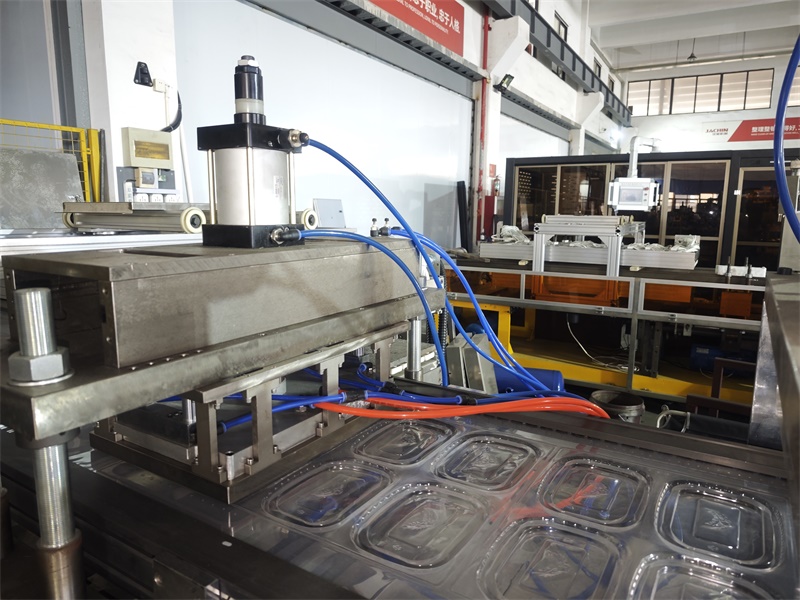
This is where advanced manufacturing equipment plays a pivotal role. Using a high-precision warm pad tray thermoforming machine ensures that every tray used in Quality Testing has the exact same dimensions and structural integrity. For instance, the JCPP-520 Automatic PP Products Thermoforming Machine produces trays with tight tolerances, eliminating the geometric variables that often plague Lab Testing. When every sample is housed in an identical structure, any variation in the Exothermic Reaction can be confidently attributed to changes in the chemical formula or raw materials, rather than packaging defects. This level of consistency is crucial for valid comparative analysis.
Batch Comparison and Traceability in Quality Control
Robust Quality Testing extends beyond individual samples to include batch-level analysis. Manufacturers must correlate Lab Testing results with production records to identify trends and anomalies. If a specific batch shows a slower Exothermic Reaction, engineers need to trace this back to specific production parameters. Was the humidity higher that day? Was a different batch of iron powder used? Or was there a slight deviation in the thermoforming process?
Traceability is enhanced when the production of packaging components is automated and consistent. With a system like the JCPP-520, each batch of trays can be linked to specific machine settings and material lots. This data can be cross-referenced with Lab Testing outcomes. If a series of tests shows inconsistent Exothermic Reaction profiles, engineers can review the thermoforming logs to see if there were any fluctuations in heating elements or vacuum pressure. This holistic approach to Quality Testing transforms data from simple pass/fail metrics into actionable insights for process optimization. It ensures that the Exothermic Reaction remains stable not just in the lab, but in mass production.
Case Study: Enhancing Test Reliability in Southeast Asia
A practical example of the impact of sample consistency on Quality Testing occurred in November 2023 at a research and development center in Bangkok, Thailand. A major warm pad manufacturer was struggling with inconsistent data during the development of a new long-duration formula. Their Lab Testing results showed wide variations in peak temperature and duration, making it difficult to finalize the recipe. The team suspected issues with the iron powder supplier, but switching suppliers did not resolve the discrepancy in the Exothermic Reaction data.
Upon closer inspection, it was revealed that the prototype trays used for Lab Testing were produced using an older, manual thermoforming setup, resulting in significant dimensional variations. The company replaced this setup with a JCPP-520 Automatic PP Products Thermoforming Machine to produce their test samples. The new machine provided trays with uniform wall thickness and precise depth. Immediately, the variability in Lab Testing results dropped by 80%. The team was able to clearly observe the true characteristics of the Exothermic Reaction, allowing them to optimize the formula efficiently. This case underscores that reliable Quality Testing is impossible without consistent sample preparation.
Conclusion and Certification Standards
In conclusion, accurate assessment of the Exothermic Reaction in warm pads requires more than just sophisticated sensors; it demands a disciplined approach to Quality Testing that includes rigorous sample preparation. By ensuring that every component used in Lab Testing is produced with high precision, manufacturers can eliminate structural variables and focus on optimizing the chemical performance. Equipment like the JCPP-520 supports this goal by providing the consistency needed for valid, reproducible data.
To maintain credibility and meet global market requirements, manufacturers should ensure their testing laboratories and production equipment adhere to recognized standards. ISO/IEC 17025 accreditation for testing laboratories demonstrates technical competence and impartiality in Quality Testing. Additionally, production equipment such as thermoforming machines should carry CE certification, indicating compliance with European safety and health standards. ISO 9001 certification for the manufacturing process further assures customers of consistent quality management. By combining certified equipment with standardized Lab Testing protocols, companies can ensure that their understanding of the Exothermic Reaction is both accurate and actionable, driving continuous improvement in product quality.