
 EN
EN
In the competitive market of disposable heating products, the functional performance of the heat source is only half the battle; the other half is won through superior User Experience. For product managers and design engineers, the interface between the consumer and the product is defined by the Peel-and-Stick mechanism. A poorly designed backing can lead to frustration, clothing damage, or product failure, regardless of how effective the heating element is. Therefore, optimizing Backing Design is not merely an aesthetic choice but a critical engineering challenge that impacts brand loyalty and return rates. Achieving the perfect balance in Peel-and-Stick functionality requires a holistic approach that integrates adhesive chemistry, substrate stability, and structural packaging. This article explores how precise manufacturing of support components, particularly through advanced thermoforming, underpins the reliability of Backing Design and enhances the overall User Experience. By ensuring that every warm pad has a consistent, high-quality base, manufacturers can deliver a seamless Peel-and-Stick interaction that meets modern consumer expectations.
The Engineering Challenges of Peel-and-Stick Mechanisms
The core of any adhesive-based product lies in the balance of adhesion and cohesion. For warm pads, the Peel-and-Stick feature must be strong enough to stay attached to clothing during movement but weak enough to be removed without leaving residue or tearing the fabric. This delicate equilibrium is heavily influenced by the substrate upon which the adhesive is applied. If the backing material is uneven, warped, or inconsistent in thickness, the adhesive layer will cure or apply unevenly, leading to variable peel forces.
From a User Experience perspective, inconsistency is the enemy. A consumer who struggles to peel the backing off one pad but finds another too loose will lose trust in the brand. Therefore, the physical foundation of the Peel-and-Stick system—the plastic tray or backboard—must be manufactured with exceptional precision. Any deviation in the surface flatness of the tray can create air pockets or weak spots in the adhesive bond, compromising the integrity of the Backing Design. This is why the manufacturing process of these structural components is just as important as the formulation of the glue itself.
Substrate Stability: The Foundation of Backing Design
The performance of a Peel-and-Stick adhesive is directly correlated to the stability of its substrate. In warm pad production, this substrate is often a rigid or semi-rigid plastic tray that holds the powder pouch and provides a surface for the adhesive strip. If this tray warps due to poor material selection or inconsistent cooling during production, the adhesive tape may not lay flat. This results in "flagging," where edges lift prematurely, or difficult peeling, where the adhesive bonds too aggressively to irregularities in the plastic.
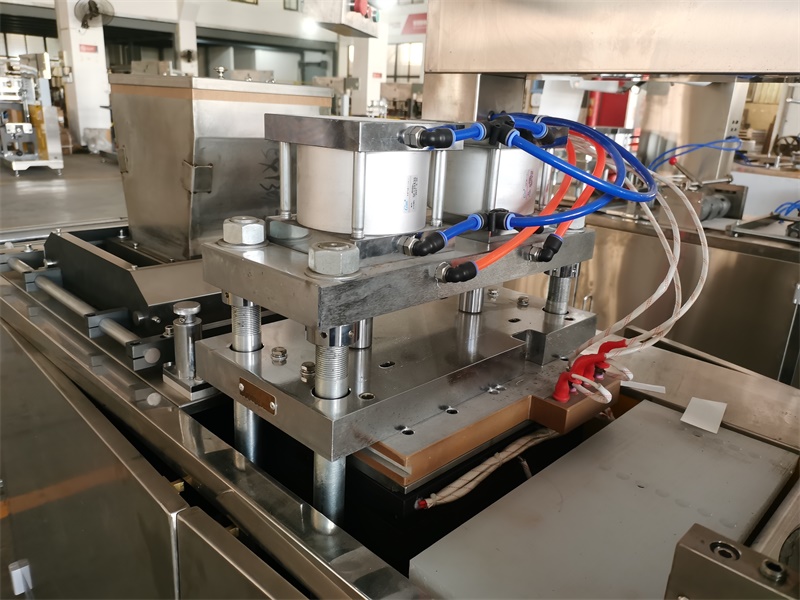
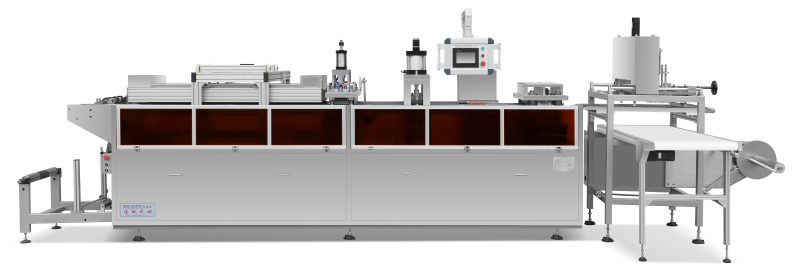
To mitigate these issues, manufacturers must utilize high-precision thermoforming equipment. The JCPP-520 Automatic PP Products Thermoforming Machine, for instance, produces trays with uniform wall thickness and superior dimensional stability. By ensuring that every tray used in the Peel-and-Stick assembly is perfectly flat and consistent, the adhesive can be applied uniformly. This consistency is crucial for maintaining the intended peel force across all units. A stable substrate ensures that the Backing Design performs as engineered, providing a reliable anchor for the adhesive and preventing premature detachment during storage or transit.
Protecting the Adhesive Through Smart Packaging
Beyond the immediate application, the Peel-and-Stick mechanism must survive the rigors of logistics. During transportation, warm pads are subject to vibration, compression, and temperature fluctuations. If the Backing Design is not adequately protected, the adhesive can degrade, collect dust, or bond unintentionally to the outer packaging. This is where the structural role of the thermoformed tray becomes vital. A well-designed tray acts as a shield, keeping the adhesive surface isolated from external contaminants and mechanical stress.
The geometry of the tray, produced by machines like the JCPP-520, can be optimized to cradle the warm pad securely while leaving the Peel-and-Stick area accessible yet protected. For example, raised rims or specific indentations can prevent the adhesive strip from touching the outer film until the user intentionally removes it. This level of protective Backing Design ensures that when the consumer finally engages with the Peel-and-Stick feature, it performs with the same reliability as it did in the laboratory. Without this structural protection, even the best adhesive formulations can fail, leading to negative User Experience reviews.
Material Compatibility and Multi-Specification Adaptability
Different markets and product lines require different Peel-and-Stick solutions. Some premium brands opt for clear, rigid PET trays to showcase the product, while others use opaque PP for cost efficiency. Each material interacts differently with adhesives. PET, for instance, offers a smoother surface that may require a different primer or adhesive formulation compared to the slightly textured surface of PP. A versatile manufacturing setup allows R&D teams to test various Backing Design configurations without retooling entire production lines.
The JCPP-520’s compatibility with PP, PET, and PS materials enables manufacturers to experiment with different substrate-adhesive combinations. This flexibility is essential for optimizing the Peel-and-Stick performance for specific target audiences. Furthermore, as product lines expand to include various sizes—from small hand warmers to large body patches—the ability to quickly switch molds ensures that each SKU receives a custom-fit tray. This adaptability supports a consistent User Experience across the entire product range, ensuring that whether a customer buys a mini or maxi pad, the Peel-and-Stick mechanism feels intuitive and reliable.
Case Study: Enhancing Adhesive Performance in North America
A notable example of the impact of substrate quality on Peel-and-Stick performance occurred in September 2023 at a manufacturing plant in Ontario, Canada. A leading warm pad brand was receiving increasing complaints about their new "Ultra-Grip" line. Users reported that the backing was either impossible to remove without tearing their shirts or, conversely, fell off within minutes of application. Initial investigations pointed to the adhesive supplier, but switching suppliers yielded no improvement.
The breakthrough came when the engineering team analyzed the plastic trays supporting the adhesive strips. They discovered that the existing thermoforming process produced trays with slight warping due to uneven cooling. This warping caused inconsistent contact between the adhesive and the fabric, leading to unpredictable peel forces. The company upgraded to a JCPP-520 Automatic PP Products Thermoforming Machine, which provided superior temperature control and uniform forming pressure. The new trays were perfectly flat and dimensionally stable. Within weeks of implementing the new trays, complaints regarding the Peel-and-Stick mechanism dropped by 90%. The consistent Backing Design allowed the adhesive to perform as intended, significantly improving the overall User Experience.
Conclusion and Certification Standards
In conclusion, designing a user-friendly Peel-and-Stick backing for warm pads is a multidisciplinary effort that extends beyond adhesive chemistry. It requires a robust Backing Design supported by high-precision manufacturing. By ensuring that the substrate is flat, stable, and protective, manufacturers can guarantee that the Peel-and-Stickmechanism delivers a consistent and positive User Experience. Equipment like the JCPP-520 plays a pivotal role in this ecosystem by providing the structural consistency needed for reliable adhesive performance.
To ensure global compliance and consumer trust, manufacturers should prioritize equipment and processes that meet international standards. CE certification for thermoforming machinery ensures adherence to European safety and health requirements. ISO 9001 certification validates the consistency of the quality management system, ensuring that every tray produced meets strict specifications. Additionally, for products intended for direct skin contact or medical use, compliance with FDA or EU regulations regarding food-contact or medical-grade plastics is essential. By combining certified manufacturing excellence with thoughtful Backing Design, companies can deliver warm pads that are not only effective but also a pleasure to use.