
 EN
EN
Navigating the complex landscape of Regulatory Requirements for medical-grade warm pads is a critical challenge for manufacturers aiming for global expansion. Unlike standard consumer heating products, medical-grade devices are subject to stringent oversight regarding safety, efficacy, and manufacturing consistency. For compliance managers and quality assurance leaders, achieving Compliance is not merely a bureaucratic hurdle but a fundamental aspect of product integrity. A key, often overlooked component of this regulatory framework is the packaging system. The trays, containers, and inner supports that house the warm pad must meet specific Medical-Grade standards to ensure biocompatibility, sterility maintenance, and patient safety. Therefore, understanding how production equipment contributes to Regulatory Requirements is essential. By utilizing advanced thermoforming technology to produce high-quality, consistent packaging components, manufacturers can significantly streamline their path to Compliance. This article explores the intersection of packaging manufacturing and Medical-Grade standards, demonstrating how precise engineering supports global market access and robust Regulatory Requirements adherence.
Understanding the Global Regulatory Framework
The first step in ensuring Compliance is understanding the diverse Regulatory Requirements across key markets. In the United States, the Food and Drug Administration (FDA) classifies certain therapeutic warm pads as Class I or Class II medical devices, requiring strict adherence to Quality System Regulations (21 CFR Part 820). In the European Union, the Medical Device Regulation (MDR) imposes rigorous clinical evaluation and post-market surveillance obligations. Similarly, China’s NMPA and other regional bodies have their own specific Regulatory Requirements. For a product to be considered Medical-Grade, every component, including the packaging, must be validated. This means that the plastic trays holding the product must be produced in a controlled environment, using materials that do not leach harmful substances. Failure to meet these Regulatory Requirements can result in product recalls, fines, or banned market entry. Thus, a holistic approach to Compliance must include the validation of the packaging supply chain.
Material Selection and Biocompatibility Standards
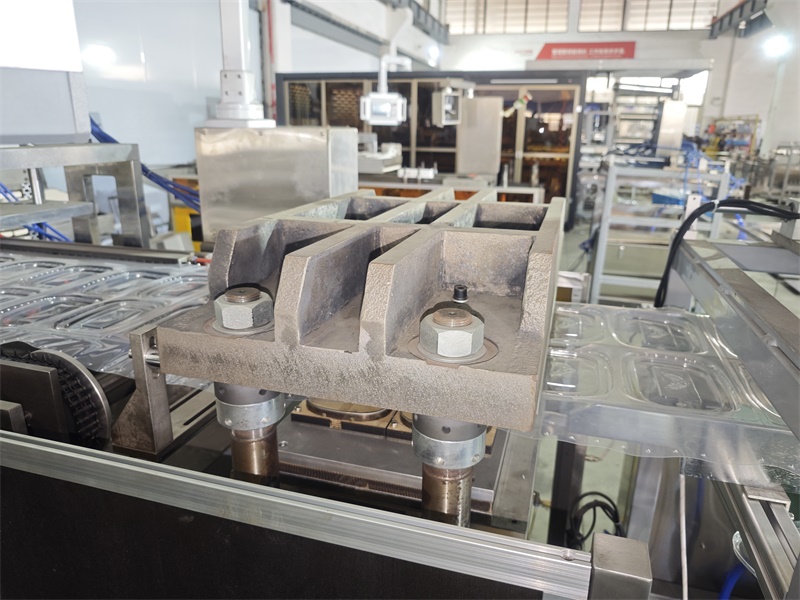
A core pillar of Medical-Grade certification is material safety. Packaging materials such as PP, PET, and PS must undergo rigorous testing to prove they are non-toxic, non-pyrogenic, and biocompatible. This is where the choice of thermoforming equipment becomes relevant. The JCPP-520 Automatic PP Products Thermoforming Machine is designed to handle these sensitive materials with precision. It ensures that the thermal history of the plastic is carefully controlled, preventing degradation that could lead to the release of volatile organic compounds (VOCs). By maintaining consistent processing parameters, the machine helps manufacturers meet the Regulatory Requirements for material purity. Furthermore, the ability to process various Medical-Grade resins allows companies to select the most appropriate material for their specific application, whether it requires high clarity for inspection or enhanced barrier properties for sterility. This flexibility is crucial for adapting to different Regulatory Requirements in various global markets.
Production Environment and Process Validation
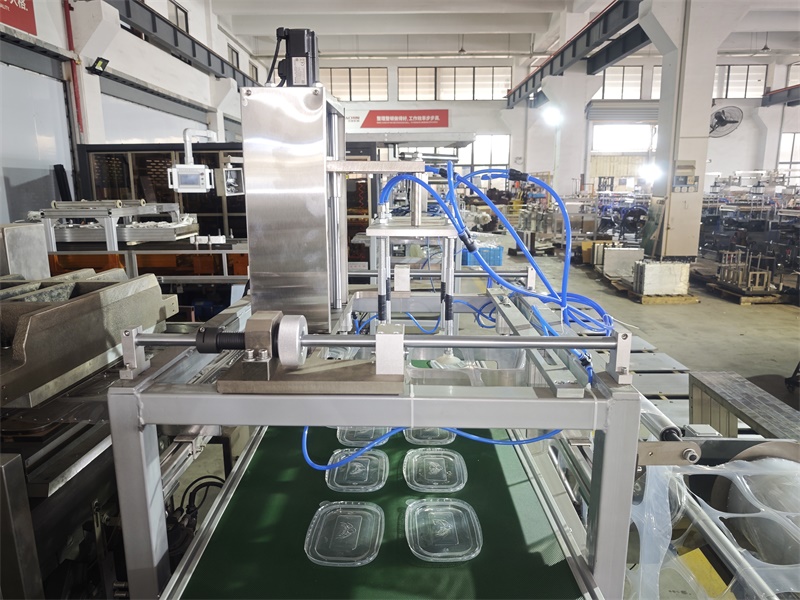
Achieving Compliance for Medical-Grade products extends beyond the final product to the manufacturing process itself. Regulatory bodies require evidence that the production environment is clean and controlled to prevent contamination. Thermoforming machines used for Medical-Grade packaging must be compatible with cleanroom operations. The JCPP-520, with its robust construction and minimal particle generation, is well-suited for such environments. Process validation is another critical aspect of Regulatory Requirements. Manufacturers must demonstrate that their equipment consistently produces parts within specified tolerances. The multi-station automation of the JCPP-520 provides the repeatability needed for valid process qualification protocols. By documenting machine parameters and output quality, companies can build a strong dossier for Compliance audits. This level of traceability and control is essential for satisfying the stringent Regulatory Requirements associated with Medical-Grade device manufacturing.
Packaging Integrity and Sterility Maintenance
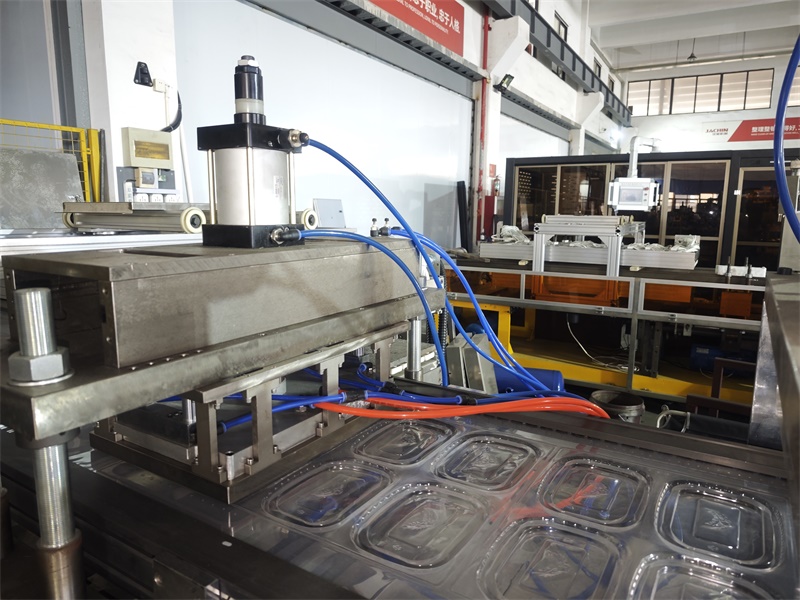
For many Medical-Grade warm pads, maintaining sterility until the point of use is a mandatory Regulatory Requirement. The packaging tray plays a vital role in this by providing a stable base for the sterile barrier system (e.g., Tyvek lids). Any defect in the tray, such as warping or uneven sealing surfaces, can compromise the seal integrity, leading to potential contamination. The JCPP-520 produces trays with exceptional dimensional accuracy, ensuring a perfect bond with the sealing film. This precision directly supports Compliance with sterility testing standards like ISO 11607. Moreover, the machine’s ability to produce complex geometries allows for designs that facilitate easy opening while maintaining a secure seal, enhancing both safety and usability. By ensuring that every tray meets these high standards, manufacturers can confidently assert their Medical-Grade status and meet the Regulatory Requirementsfor package integrity.
Case Study: Achieving CE MDR Compliance in Europe
A practical example of how packaging quality impacts Regulatory Requirements occurred in March 2023 at a medical device manufacturer in Munich, Germany. The company was preparing to launch a new line of therapeutic warm pads under the EU MDR. During the initial technical file review, notified body auditors raised concerns about the consistency of the plastic trays used in the primary packaging. Variations in tray depth were causing inconsistent seal strengths, posing a risk to sterility claims. This issue threatened their Compliance timeline and market launch.
To resolve this, the manufacturer integrated a JCPP-520 Automatic PP Products Thermoforming Machine into their production line. The new equipment provided superior control over heating and forming pressures, resulting in trays with uniform wall thickness and flat sealing rims. Subsequent validation tests showed a 99.9% pass rate for seal integrity, fully satisfying the Regulatory Requirements for sterile barrier systems. The improved consistency allowed the company to successfully complete their Medical-Grade certification and achieve Compliance with CE MDR standards. This case highlights how investing in precise thermoforming technology is a strategic move for meeting Regulatory Requirements and ensuring successful market entry.
Conclusion and Certification Standards
In conclusion, navigating the Regulatory Requirements for Medical-Grade warm pads requires a comprehensive approach that includes rigorous packaging validation. The production of high-quality, consistent trays is not just a manufacturing detail but a critical component of Compliance. By leveraging advanced thermoforming solutions like the JCPP-520, manufacturers can ensure their packaging meets the stringent Medical-Grade standards required by global regulators. This commitment to quality supports the overall Regulatory Requirements framework, reducing risk and enhancing product reliability.
To further ensure global acceptance, manufacturers should verify that their equipment and processes hold relevant certifications. CE marking indicates compliance with European health, safety, and environmental protection standards. ISO 13485 certification is essential for demonstrating a quality management system specific to medical devices. Additionally, ISO 9001 certification validates general quality management practices. By combining certified equipment with robust Compliance strategies, companies can confidently navigate the complex Regulatory Requirements of the Medical-Grade market, ensuring their products are safe, effective, and ready for global distribution.