
 EN
EN
In the competitive landscape of disposable heating products, operational efficiency and packaging integrity are paramount. For factory managers and procurement specialists, optimizing the production line requires a holistic view that integrates both outer bagging and internal structural support. While the vertical form fill seal machine drives the speed of the final outer packaging, the stability of the entire process relies heavily on the precision of the internal components. This is where the warm pad tray thermoforming machine becomes indispensable. By producing consistent, high-quality trays and inner supports, this equipment ensures that the automatic warm pad packaging machine operates without interruption. Understanding the synergy between the warm pad outer packaging machineand the thermoforming unit is critical for achieving high throughput, minimizing waste, and ensuring product quality. This article explores how integrating these technologies creates a robust, high-speed packaging solution.
The Critical Role of VFFS in Modern Packaging Lines
The adoption of a vertical form fill seal machine has revolutionized the way warm pads are packaged for global distribution. These machines offer unparalleled speed, forming bags from roll stock, filling them with product, and sealing them in a continuous motion. However, the efficiency of a vertical form fill seal machine is only as good as the consistency of the product being fed into it. Irregularly shaped or unstable warm pads can cause jams, misalignments, and sealing failures, leading to significant downtime. To mitigate these risks, manufacturers must ensure that each warm pad is supported by a rigid, uniformly shaped tray. This is where the warm pad tray thermoforming machine plays a pivotal role. By providing a stable base, the tray ensures that the product enters the automatic warm pad packaging machine in a predictable orientation, allowing the VFFS to operate at its maximum potential. Without this structural support, the high-speed capabilities of the warm pad outer packaging machine cannot be fully realized.
Enhancing Stability with Precision Thermoforming
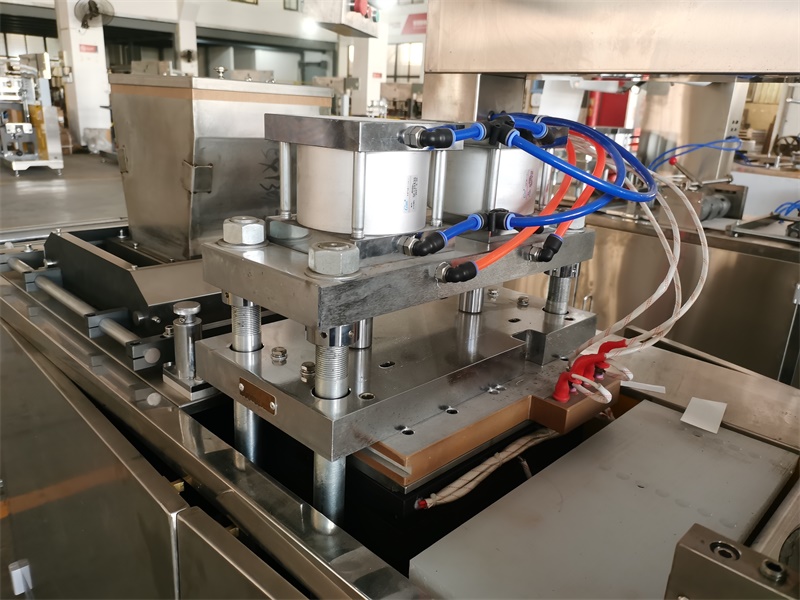
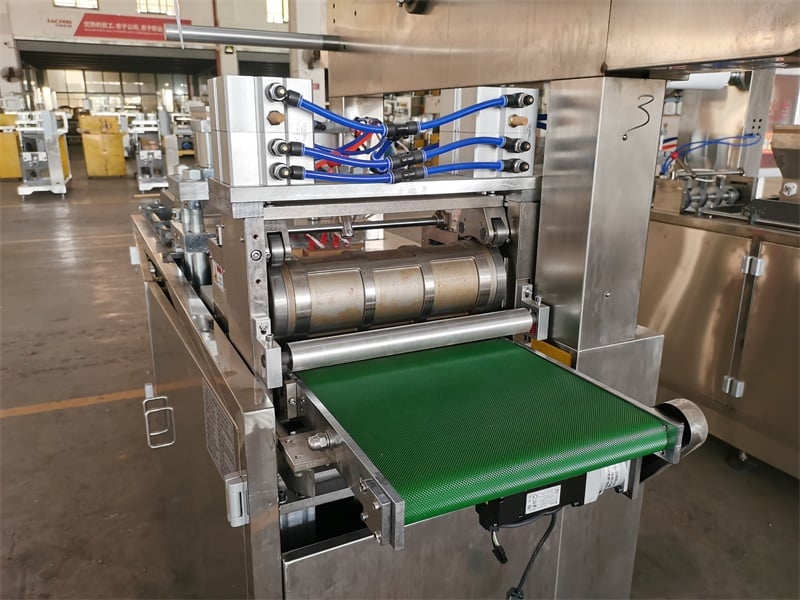
The primary function of a warm pad tray thermoforming machine is to produce plastic trays, inner supports, and other structural components with exceptional dimensional accuracy. In a high-speed environment, even minor variations in tray depth or wall thickness can disrupt the flow of the production line. The JCPP-520, a state-of-the-art warm pad tray thermoforming machine, utilizes multi-station automation to ensure that every tray produced meets strict tolerance levels. This consistency is vital for the smooth operation of the automatic warm pad packaging machine. When trays are uniform, they stack neatly, feed smoothly into conveyors, and sit correctly within the outer bag formed by the vertical form fill seal machine. This reduces the risk of package deformation and ensures that the warm pad outer packaging machine can maintain a consistent seal quality. Furthermore, precise thermoforming enhances the aesthetic appeal of the final product, contributing to a premium brand image.
Material Compatibility and Packaging Versatility
Different market segments require different packaging solutions, ranging from cost-effective opaque trays to premium clear displays. A versatile warm pad tray thermoforming machine must be capable of processing various materials, including PP, PET, and PS. The JCPP-520 excels in this area, offering compatibility with a wide range of thermoplastics. This flexibility allows manufacturers to tailor their packaging to specific customer needs without compromising on production speed. For instance, PET trays offer superior clarity and rigidity, making them ideal for retail display, while PP provides a cost-effective solution for bulk shipments. By choosing a warm pad tray thermoforming machine that supports multiple materials, companies can easily adapt to changing market demands. This adaptability also benefits the warm pad outer packaging machine, as different tray materials may require slight adjustments in handling but do not necessitate a complete line overhaul. The ability to switch materials seamlessly ensures that the automatic warm pad packaging machine remains efficient regardless of the packaging style.
Automation Synergy and Line Integration
Achieving true high-speed performance requires seamless integration between the warm pad tray thermoforming machine and the vertical form fill seal machine. In an optimized production line, these two systems work in tandem, synchronized by advanced control software. The thermoforming unit produces trays at a rate that matches the output of the automatic warm pad packaging machine, ensuring a continuous supply of structural supports. This integration minimizes manual handling, reducing labor costs and the risk of contamination. Moreover, the data exchange between the warm pad tray thermoforming machine and the warm pad outer packaging machine allows for real-time monitoring and adjustment. If the thermoforming unit detects a deviation in tray quality, it can signal the vertical form fill seal machine to pause or adjust its parameters, preventing defective products from being packaged. This level of synergy is essential for maintaining the high efficiency expected from a modern automatic warm pad packaging machine.
Flexibility for Multi-Specification Production
In today’s dynamic market, manufacturers often need to produce multiple SKUs with different sizes and designs. A rigid production line can struggle with frequent changeovers, leading to lost productivity. The JCPP-520 warm pad tray thermoforming machine addresses this challenge with its flexible mold changeover system. Operators can quickly switch between different molds to produce various tray sizes and shapes, allowing the automatic warm pad packaging machine to handle diverse product lines with minimal downtime. This flexibility is crucial for companies that cater to custom orders or seasonal demands. By reducing the time required for changeovers, the warm pad tray thermoforming machine ensures that the vertical form fill seal machine can continue operating at high speeds across different product variants. This adaptability makes the entire warm pad outer packaging machine setup more resilient and responsive to market changes.
Case Study: Optimizing Production in Dubai
A compelling example of this integrated approach occurred in October 2023 at a manufacturing facility in Dubai, United Arab Emirates. A leading producer of therapeutic warm pads was facing challenges with their existing packaging line. Their vertical form fill seal machine frequently experienced jams due to inconsistent tray dimensions supplied by an external vendor. This resulted in a 15% rejection rate and significant production delays. The company decided to upgrade their infrastructure by installing a JCPP-520 warm pad tray thermoforming machine to bring tray production in-house.
The impact was immediate. The new warm pad tray thermoforming machine produced trays with precise dimensions and uniform wall thickness, ensuring perfect compatibility with their automatic warm pad packaging machine. Within three months, the rejection rate dropped to less than 1%, and the overall line speed increased by 25%. The synergy between the warm pad tray thermoforming machine and the vertical form fill seal machine allowed the facility to meet a sudden surge in demand during the winter season without additional labor. This case demonstrates how investing in high-quality thermoforming technology directly enhances the performance and reliability of the warm pad outer packaging machine.
Conclusion and Certification Standards
In conclusion, the efficiency of a high-speed packaging line depends on the seamless integration of its components. While the vertical form fill seal machine handles the outer bagging, the warm pad tray thermoforming machineprovides the essential structural support that enables smooth operation. By investing in a reliable warm pad tray thermoforming machine like the JCPP-520, manufacturers can ensure that their automatic warm pad packaging machine operates at peak efficiency. This synergy not only reduces waste and downtime but also enhances the overall quality of the warm pad outer packaging machine output. For companies looking to scale their operations, prioritizing the compatibility between the warm pad tray thermoforming machine and the vertical form fill seal machine is a strategic imperative.
To ensure compliance with international standards and facilitate global trade, manufacturers should verify that their equipment holds relevant certifications. The JCPP-520 warm pad tray thermoforming machine is designed to meet CE safety standards, ensuring operational safety in European markets. Additionally, ISO 9001 certification confirms that the manufacturing process adheres to rigorous quality management principles. For food-contact or medical-grade applications, compliance with FDA or EU food contact material regulations is also essential. By choosing certified equipment, companies can trust that their automatic warm pad packaging machine and warm pad outer packaging machine systems are built to last and perform reliably in any market.