
 EN
EN
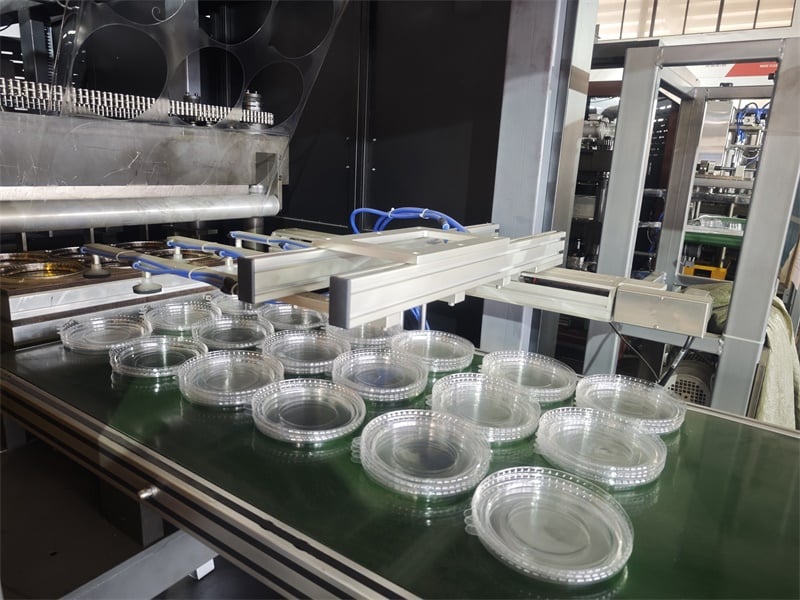
Market Growth Trajectory and Key Forecast Drivers
CAGR, Market Value Projections (2025–2034), and Macroeconomic Catalysts
The plastic thermoforming machines market is projected to grow at a compound annual growth rate (CAGR) of 6.2% from 2025 to 2034, reaching an estimated value of $4.8 billion by the end of the forecast period. This expansion is underpinned by rising disposable incomes in emerging economies, rapid urbanization driving demand for packaged goods, and sustained global investment in manufacturing infrastructure. While inflationary pressures and evolving trade policies introduce regional uncertainty, they have not derailed long-term capital allocation toward packaging automation—particularly where supply chain resilience and local production agility are strategic priorities.
Post-Pandemic Recovery and Supply Chain Localization as Demand Accelerators
Post-pandemic recovery has accelerated reshoring and nearshoring initiatives, with manufacturers prioritizing localized, responsive production to mitigate future supply chain disruptions. This shift has spurred immediate demand for thermoforming machines suited to smaller-batch, high-mix operations—especially those offering rapid tool changeover, energy-efficient heating, and integration-ready controls. Concurrently, inventory rebuilding across consumer goods sectors continues to support replacement demand for aging equipment, reinforcing steady OEM and aftermarket activity.
Regional Demand Dynamics for Plastic Thermoforming Machines
Asia-Pacific: Scale, FDI in Packaging Infrastructure, and Automation Uptake
Asia-Pacific remains the largest and fastest-growing regional market for plastic thermoforming machines, driven by massive industrial scale, strong Foreign Direct Investment (FDI) in packaging infrastructure, and accelerating automation adoption. In countries like China, India, and Vietnam, food packaging and electronics manufacturers are upgrading to advanced thermoforming systems to meet export quality standards, labor-cost constraints, and sustainability expectations—including compliance with international recyclability guidelines. These investments reflect a broader regional pivot from cost-driven to capability-driven manufacturing.
North America & Europe: Reshoring Initiatives and Regulatory-Driven Equipment Upgrades
In North America and Europe, demand is increasingly shaped by policy and risk mitigation—not just volume. Reshoring efforts—supported by incentives such as the U.S. CHIPS and Science Act and EU’s Industrial Decarbonisation Strategy—are spurring capital expenditure in modern thermoforming equipment capable of precision mono-material processing and energy-efficient operation. At the same time, tightening regulations on recyclable content, material traceability, and carbon reporting are driving upgrades to legacy lines. Manufacturers now prioritize machines that support post-consumer recycled (PCR) resins and comply with ISO 50001 (energy management) and ISO 14001 (environmental management) frameworks.
End-Use Industry Demand: Food & Beverage, Medical, and Electronics
Food & Beverage (51% Share): Shelf-Life Extension, EPR Compliance, and Cold-Chain Tray Innovation
Accounting for over half of global thermoforming machine demand, the food and beverage sector relies heavily on innovations that extend shelf life, ensure regulatory compliance, and adapt to e-commerce logistics. Extended Producer Responsibility (EPR) mandates across 48 countries are fast-tracking adoption of mono-material trays—often produced using thin-gauge thermoforming that reduces plastic use by up to 25% without sacrificing barrier performance. Cold-chain applications, especially insulated frozen-food trays, require precise thermal control and impact resistance, while modified atmosphere packaging (MAP) trays extend fresh produce shelf life by ~40%. Leading brands now specify machines capable of switching between clamshell, compartmentalized meal, and vented formats at speeds exceeding 3,000 units/hour—balancing flexibility, speed, and sustainability.
Medical (27% Share): FDA-Compliant Precision Thermoforming and Sterile Single-Use Packaging Needs
Medical device packaging represents the second-largest application segment, demanding micron-level dimensional accuracy, validated sterilization compatibility, and full regulatory traceability. With surgical tray demand growing at 11.2% CAGR post-pandemic, thermoforming machines must deliver ±0.1mm tolerance to preserve sterile barriers in blister packs and rigid trays. Systems compliant with FDA 21 CFR Part 820 and ISO 13485 now routinely integrate inline vision inspection (achieving 99.98% defect detection) and support medical-grade polymers—including gamma-stable cyclo-olefin copolymers (COC) and PCR-PET for non-implant diagnostics and IV components. The rise of home healthcare further drives demand for tamper-evident, child-resistant pouches—requiring consistent seal integrity and material uniformity across variable batch sizes.
Technology and Sustainability Shifts Transforming Plastic Thermoforming Machines
Industry 4.0 Integration: IoT, Predictive Maintenance, and Real-Time Process Optimization
Industry 4.0 capabilities are no longer optional—they’re central to competitive thermoforming operations. Modern machines embed IoT sensors to monitor temperature gradients, vacuum pressure, heater response times, and cycle consistency in real time. This data powers predictive maintenance algorithms that reduce unplanned downtime by up to 30% and extend service intervals. Cloud-connected analytics platforms enable remote optimization of heating profiles and forming sequences—cutting material waste by as much as 22% while maintaining critical tolerances. For contract packagers and multi-site manufacturers, these features deliver measurable ROI through standardized processes, faster changeovers, and reduced operator dependency.
Regulatory Pressure: EU Single-Use Plastics Directive and Circular Economy Mandates Driving Retrofitting and Material-Agnostic Machine Design
Regulatory imperatives—especially the EU Single-Use Plastics Directive (SUPD) and national EPR schemes—are fundamentally reshaping machine architecture. To process recycled PET, rPP, and bio-based polymers alongside virgin resins, leading thermoformers now feature modular infrared heating zones, adaptive vacuum control, and closed-loop temperature feedback systems. Crucially, many manufacturers offer retrofit kits for existing lines—enabling compliance without full system replacement. This dual strategy—future-proof new builds and extend the viable life of installed assets—supports both circular economy goals and pragmatic capital planning. As material traceability requirements intensify (e.g., via digital product passports), thermoforming systems increasingly integrate with ERP and MES platforms to log resin origin, processing parameters, and compliance documentation automatically.
FAQ: Plastic Thermoforming Machines Market
What is the projected growth rate for the plastic thermoforming machines market?
The market is expected to grow at a compound annual growth rate (CAGR) of 6.2% from 2025 to 2034.
Which regions dominate the plastic thermoforming machines market?
Asia-Pacific is the largest and fastest-growing market, followed by North America and Europe.
What end-use sectors drive demand for plastic thermoforming machines?
Key sectors include food & beverage, medical packaging, and electronics. Food & beverage accounts for over 51% of demand.
How is Industry 4.0 impacting thermoforming machines?
Industry 4.0 enhances machine functionality through IoT integration, predictive maintenance, and real-time optimization.
What regulatory factors influence machine upgrades?
Regulations such as the EU Single-Use Plastics Directive and Extended Producer Responsibility schemes are driving demand for sustainable and material-agnostic designs.
Table of Contents
- Market Growth Trajectory and Key Forecast Drivers
- Regional Demand Dynamics for Plastic Thermoforming Machines
- End-Use Industry Demand: Food & Beverage, Medical, and Electronics
- Technology and Sustainability Shifts Transforming Plastic Thermoforming Machines
-
FAQ: Plastic Thermoforming Machines Market
- What is the projected growth rate for the plastic thermoforming machines market?
- Which regions dominate the plastic thermoforming machines market?
- What end-use sectors drive demand for plastic thermoforming machines?
- How is Industry 4.0 impacting thermoforming machines?
- What regulatory factors influence machine upgrades?