
 EN
EN
In the highly competitive global market for disposable heating products, such as hand warmers and body heat patches, product integrity is non-negotiable. For manufacturers and exporters, achieving a truly Leak-Proof package is not merely a quality preference but a critical safety and compliance requirement. The core of this integrity lies in the precision of the Inner Bag Sealing process. Even microscopic deviations in seal width, temperature, or pressure can lead to powder leakage, air ingress, or premature activation, resulting in significant financial losses and brand damage. As industry experts, we recognize that while the sealing machine performs the final closure, the success of Inner Bag Sealing is heavily dependent on the structural consistency of the packaging components. This article explores how advanced Automation in the production of packaging substrates supports robust Inner Bag Sealing, ensuring every unit is reliably Leak-Proof and meets stringent international standards.
The Critical Role of Inner Bag Sealing in Product Safety
The functionality of a disposable warm pad relies on a controlled exothermic reaction within a sealed environment. The Inner Bag Sealing serves as the primary barrier containing the iron powder mixture and regulating oxygen intake. If this seal is compromised, the consequences are severe. Powder leakage can cause skin irritation or damage to clothing, while air leaks can lead to premature activation or inconsistent heating performance. Therefore, achieving a Leak-Proof status is the baseline for consumer safety.
From an engineering perspective, the quality of Inner Bag Sealing is influenced by multiple factors, including film material properties, sealing jaw alignment, and crucially, the dimensional stability of the packaging structure. Inconsistent tray dimensions or uneven backing layers can create gaps or weak points during the sealing process. Thus, Automation in the upstream production of these structural components is essential to provide a uniform foundation for effective Inner Bag Sealing. Without this foundational consistency, even the most advanced sealing equipment may struggle to produce a consistently Leak-Proof product.
Challenges in Achieving Consistent Inner Bag Sealing
Maintaining high-quality Inner Bag Sealing at high production speeds is technically challenging. Traditional semi-automatic processes often suffer from human error, leading to variations in bag placement and sealing pressure. These inconsistencies result in batch-to-batch differences in seal strength, increasing the risk of leaks. Furthermore, manual handling can introduce contaminants or distort the bag shape, complicating the Inner Bag Sealing process.
Another major challenge is material variability. Different films and laminates require specific temperature and pressure profiles for optimal sealing. If the underlying plastic tray or backing is not uniform in thickness or flatness, the heat distribution during sealing becomes uneven. This leads to weak spots that compromise the Leak-Proof integrity. To overcome these challenges, manufacturers must adopt Automation strategies that ensure every component entering the sealing station is identical in form and dimension. This level of precision is only achievable through advanced manufacturing technologies that prioritize consistency.
How Automation Supports Leak-Proof Integrity
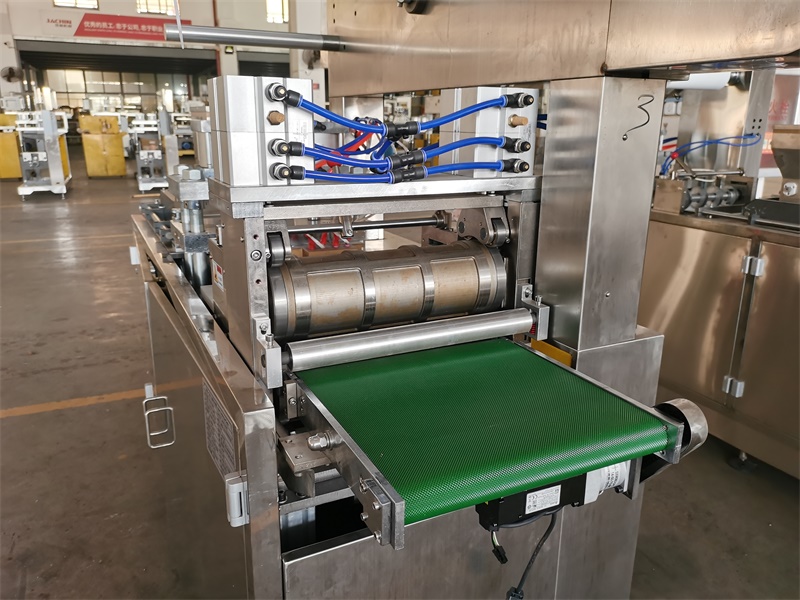
Automation plays a pivotal role in enhancing the reliability of Inner Bag Sealing. By automating the production of packaging components, such as plastic trays and backing layers, manufacturers can eliminate the variables associated with manual labor. Automated thermoforming machines produce components with tight tolerances, ensuring that every bag sits perfectly aligned during the sealing process. This alignment is crucial for creating a uniform seal that is truly Leak-Proof.
Moreover, automated systems can integrate real-time monitoring and feedback loops. If a deviation in component dimensions is detected, the system can adjust parameters or reject defective units before they reach the Inner Bag Sealingstage. This proactive approach minimizes waste and ensures that only high-quality materials are used in the final assembly. By integrating Automation into the entire production line, from component formation to final sealing, manufacturers can achieve a level of Leak-Proof consistency that is impossible with manual methods.
Case Study: Enhancing Seal Reliability in Southeast Asia
A practical example of the impact of Automation on Inner Bag Sealing occurred in February 2024 at a manufacturing facility in Bangkok, Thailand. A leading producer of premium hand warmers was experiencing a 5% rejection rate due to minor powder leaks and inconsistent seal strength. An internal audit revealed that the root cause was variation in the thickness and flatness of the plastic backing trays, which led to uneven pressure during the Inner Bag Sealing process.
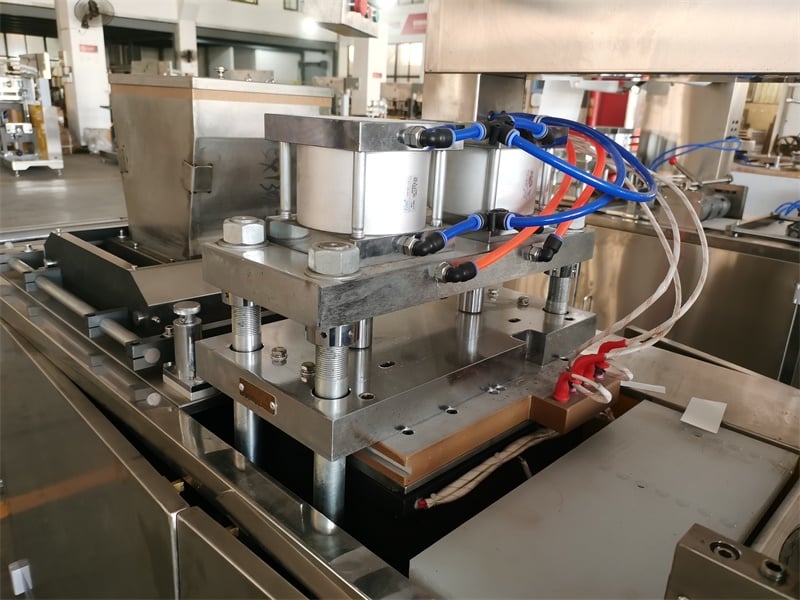
The company upgraded its production line by installing a JCPP-520 automatic thermoforming machine from Wenzhou Jiacheng Machinery. This machine provided precise control over heating and forming, producing backing trays with uniform wall thickness and exceptional flatness. As a result, the Inner Bag Sealing process became significantly more stable, with seal strength variations reduced by 90%. The factory achieved a near-zero defect rate for Leak-Proofintegrity, allowing them to secure a major export contract with a European retailer. This case demonstrates how Automation in component production directly enhances the effectiveness of Inner Bag Sealing.
Material Compatibility and Flexibility in Production
Different markets and product types require various materials for packaging, such as PP, PET, or PS. Each material has unique thermal and mechanical properties that affect Inner Bag Sealing. For instance, PP requires higher sealing temperatures than PET, while PS offers greater rigidity but may be more brittle. Manufacturers need equipment that can handle these diverse materials without compromising on Leak-Proof performance.
Advanced thermoforming machines like the JCPP-520 offer multi-material compatibility, allowing producers to test and optimize different packaging structures. This flexibility enables manufacturers to select the best material for their specific Inner Bag Sealing requirements, ensuring optimal bond strength and durability. Additionally, the ability to quickly change molds allows for rapid adaptation to different product sizes and designs, supporting efficient Automation across multiple SKUs. This versatility is essential for maintaining Leak-Proof standards in a dynamic market.
Quality Control and Traceability for Export Compliance
For export compliance, documentation and traceability are as important as the product itself. Manufacturers must maintain detailed records of Inner Bag Sealing parameters, including temperature, pressure, and dwell time, for each production batch. This data provides evidence of consistent Leak-Proof performance and facilitates quick resolution of any quality issues. Automated systems often include data logging features that simplify this process, ensuring full transparency.
Furthermore, regular testing of seal strength and air tightness is essential to verify Leak-Proof integrity. Third-party certifications often require proof of these controls. By implementing robust Automation and quality management systems, manufacturers can easily meet these requirements, building trust with international buyers. Consistent Inner Bag Sealing supported by reliable Automation is key to successful Export Compliance and long-term market presence.
Conclusion and Certification Standards
In conclusion, achieving a reliably Leak-Proof warm pad requires a holistic approach that integrates precise Inner Bag Sealing with consistent component production. Automation is the enabler of this consistency, reducing human error and ensuring that every unit meets high-quality standards. By investing in advanced thermoforming technology, manufacturers can support their Inner Bag Sealing processes with uniform, high-quality packaging structures.
To demonstrate commitment to quality and safety, manufacturers should seek equipment and processes that align with international standards. Relevant certifications include ISO 9001 for quality management systems, which ensures that processes like Inner Bag Sealing and Automation are consistently monitored. Additionally, CE marking for machinery safety and compliance with environmental directives like RoHS are critical for global trade. By combining precise Inner Bag Sealing techniques with certified Automation technologies, manufacturers can guarantee Leak-Proof performance, delivering safe and reliable products to consumers worldwide. Ultimately, mastering Automation is the key to sustaining excellence in Inner Bag Sealing and achieving true Leak-Proof reliability.