
 EN
EN
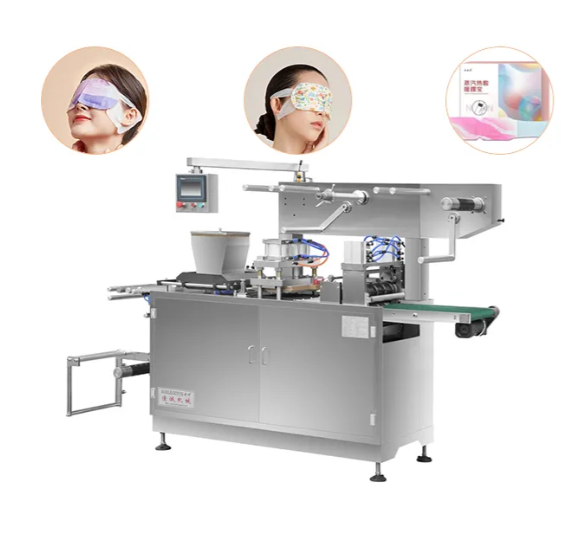
Warm Pad Making Machine: Definition, Core Function, and Industrial Significance
A warm pad making machine is an automated manufacturing system designed to produce therapeutic heating pads for localized heat therapy. It integrates fabric handling, heating element placement, and hermetic sealing into a single production line—ensuring consistency, safety, and scalability. Core functions include sub-millimeter alignment of conductive traces between insulating layers and in-line electrical verification to meet medical-grade safety standards. Its industrial significance lies in supporting the global shift toward non-pharmacological pain management: clinical data shows over 65% of chronic pain patients use heat therapy as part of their care regimen (Journal of Pain Research, 2023).
Manufacturers rely on these systems to scale production without compromising reliability. Automated assembly replaces error-prone manual processes—particularly in heating trace placement and insulation bonding—reducing burn-related recalls and strengthening consumer trust. The machines support high-volume output of medical- and consumer-grade pads used for arthritis and back pain management, post-injury rehabilitation, and menstrual cramp relief. With aging populations and expanding sports medicine applications driving 12% annual market growth, warm pad making machines are becoming essential infrastructure in modern medical device manufacturing.
How a Warm Pad Making Machine Integrates Key Manufacturing Processes
Automated Layer Assembly: Fabric, Heating Elements, and Insulation Alignment
Modern warm pad making machines achieve precision layer alignment using synchronized material handling systems that position textile substrates, carbon fiber heating elements, and thermal insulation within ±0.5mm tolerance. Robotic arms with vacuum grippers place pre-cut heating traces onto fabric bases, while ultrasonic bonding simultaneously secures insulation layers—eliminating manual misalignment. This integrated approach reduces layer-shift defects by 63% compared to semi-automated alternatives (Journal of Advanced Manufacturing Technology, 2023), ensuring uniform thermal delivery across the finished pad.
In-Line Electrical and Safety Verification for Reliable Warm Pad Output
Each assembled unit undergoes automated quality checks before final encapsulation. Continuity testing at 12V DC detects micro-fractures in heating circuits, while infrared thermography maps surface temperature gradients to flag hotspots exceeding 5°C variance. Dielectric strength testers then apply 3.5kV to confirm insulation integrity. This closed-loop verification achieves 99.2% compliance with IEC 60335-2-17—the international standard for heating appliance safety—and significantly lowers field failure risk.
Heating Element Integration Technologies in Modern Warm Pad Making Machines
Modern warm pad making machines incorporate two key heating element integration technologies to ensure performance, durability, and regulatory compliance.
Precision Thin-Film and Printed Resistor Deposition
This method applies ultra-thin conductive layers (0.05–0.2mm) directly onto fabric substrates via aerosol jet printing or vapor deposition. Unlike wire-based heating elements, printed resistors deliver 99% surface uniformity and reduce energy waste by 15–30%. Their design supports customizable heat zones—enabling targeted therapy for specific anatomical regions. Automated optical inspection verifies circuit continuity prior to lamination, preventing microfracture-induced failures.
Thermoplastic Elastomer Overmolding for Trace Encapsulation
Robotic overmolding applies a flexible thermoplastic elastomer (TPE) layer (0.8–1.2mm thick) around heating traces during final lamination. This dual-function barrier provides moisture resistance and mechanical protection—withstanding over 5,000 flex cycles while diffusing heat to maintain surface temperatures below 50°C (122°F), per IEC 60335-2-17 requirements. By eliminating separate encapsulation steps, it streamlines production and enhances long-term reliability.
Together, these technologies allow manufacturers to meet stringent medical device standards while scaling output for both clinical and retail markets.
Materials Handling and Sealing Capabilities of Warm Pad Making Machines
Warm pad making machines manage diverse input materials—from breathable fabrics to flexible heating circuits—using automated feeding systems equipped with tension control and optical sensors. These prevent slippage, wrinkling, or stretching that could compromise trace integrity or cause short circuits. For sealing, programmable thermal bonding bars apply calibrated heat (150–200°C) and pressure to fuse thermoplastic polyurethane (TPU) encapsulation layers, achieving seam strength above 3.5 N/mm² and full moisture barriers around heating elements.
Adjustable parameters—including temperature, dwell time (0.5–3 seconds), and compression force—enable optimization across fabric weights and polymer blends. Heavier insulation layers, for example, benefit from higher pressure and controlled cooling to prevent delamination under repeated flexing. Real-time thermal imaging further enhances quality assurance by detecting microscopic sealing flaws—cutting defect rates by 67% versus manual inspection.
| Material Handling Feature | Sealing Parameter | Quality Impact |
|---|---|---|
| Pneumatic fabric tensioners | Temperature gradient control | Eliminates edge warping |
| Electrostatic dust removal | Pressure uniformity (±0.2 bar) | Prevents micro-leaks |
| Roller-based alignment | Cooling rate modulation | Enhances layer adhesion |
These capabilities ensure finished warm pads withstand over 5,000 flex cycles while maintaining waterproofing, thermal consistency, and electrical safety—critical benchmarks for consumer confidence and regulatory approval.
FAQ
What is a warm pad making machine?
A warm pad making machine is an automated manufacturing system designed to produce therapeutic heating pads for localized heat therapy, integrating fabric handling, heating element placement, and sealing into a seamless production process.
What are the benefits of automated warm pad production?
Automated production ensures consistent quality, reduces defects, and supports scalability, eliminating errors commonly found in manual assembly processes.
Which technologies are used to integrate heating elements?
Technologies such as precision thin-film and printed resistor deposition and thermoplastic elastomer overmolding are used for heating element integration, ensuring performance, durability, and compliance with safety standards.
What materials are handled by the machine?
The machine is designed to handle breathable fabrics, flexible heating circuits, and insulation layers using highly automated feeding systems equipped with sensors and tension control mechanisms.
How do these machines ensure safety compliance?
By employing in-line electrical testing, infrared thermography, and dielectric strength evaluations, warm pad making machines meet stringent international standards for heating appliance safety.
Table of Contents
- Warm Pad Making Machine: Definition, Core Function, and Industrial Significance
- How a Warm Pad Making Machine Integrates Key Manufacturing Processes
- Heating Element Integration Technologies in Modern Warm Pad Making Machines
- Materials Handling and Sealing Capabilities of Warm Pad Making Machines
- FAQ