
 EN
EN
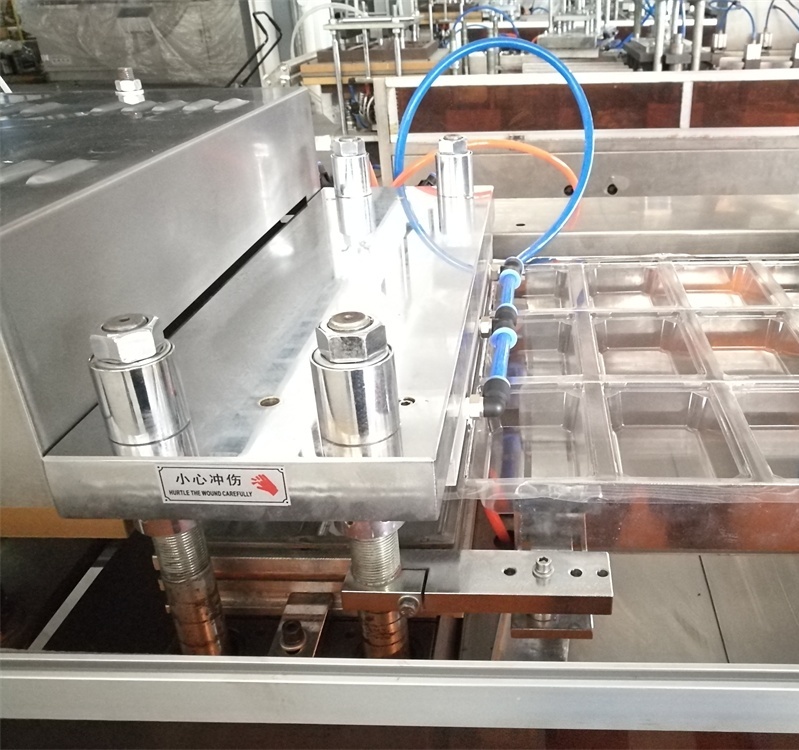
Precision Limits of Vacuum Forming: Identifying the Breaking Point
Surface Finish and Undercut Definition Thresholds
Vacuum forming delivers cost-effective shape generation—but its precision is bounded by fundamental physics. The single-sided atmospheric pressure differential (~14 psi) lacks the force to push softened thermoplastic sheet into fine mold textures or deep undercuts. As a result, surface finish fidelity plateaus: consistent replication of texture depths below 0.1 mm is rarely achieved, and surface roughness (Ra) typically remains above 0.8 µm on commodity-grade parts.
Undercuts present a steeper limitation. Without auxiliary plug assist or positive pressure, gravity-driven draping causes the sheet to bridge across internal corners rather than fill them. Undercuts deeper than ~1 mm—or exceeding 5% of total part depth—induce severe localized thinning and risk permanent sheet lock on the mold. Sharp-edged undercuts requiring radii smaller than the sheet thickness will inevitably round and stretch, compromising functional definition. When designs demand crisp, repeatable undercuts or cosmetic surfaces with sub-0.5 µm Ra finishes, vacuum forming crosses its practical threshold—and pressure forming becomes the technically necessary alternative.
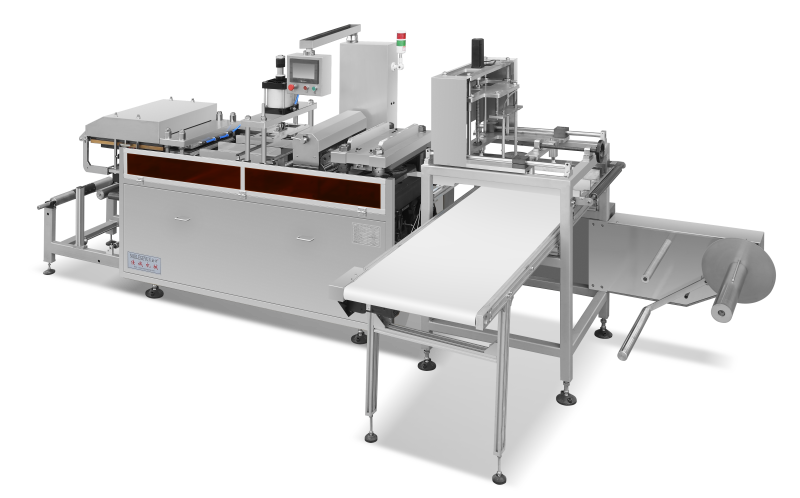
Material Thickness Interaction with Detail Fidelity
Sheet thickness governs detail fidelity more directly in vacuum forming than in most other thermoforming processes. Exceeding 3 mm introduces thermal inertia that impedes rapid, localized conforming—leading to uneven stretching, thin spots around sharp features, and excess material on flat sections. Empirical best practice shows that for reliable replication of a 0.5 mm corner radius, sheet gauge should not exceed 1.5× that radius; thicker material promotes bridging and feature blurring.
Conversely, sheets thinner than 0.5 mm over-stretch easily under vacuum, increasing puncture risk and introducing thickness variations greater than ±0.1 mm—eroding dimensional consistency. While specialized HIPS or ABS grades may improve process window, the core constraint remains: non-uniform thickness distribution after heating directly degrades correlation between mold detail and final part geometry. When applications require tight tolerances on micro-texturing or wall thickness control within ±5% of nominal while maintaining intricate surface geometry, vacuum forming’s inability to regulate material flow marks a definitive breaking point—signaling the need for a higher-force, more controllable process like pressure forming.
Pressure Forming Advantages: Where Enhanced Control Delivers Precision
How Air Pressure Improves Dimensional Accuracy and Consistency
Unlike vacuum forming—which relies solely on atmospheric pressure (~14.7 psi) and risks premature cooling before full mold contact—pressure forming applies controlled, high-pressure air (50–100+ psi) to the top surface of the heated sheet. This transforms the process from passive suction into an active, force-driven consolidation.
| Process Step | Vacuum Forming | Pressure Forming |
|---|---|---|
| Forming Force | Atmospheric pressure only (~14.7 psi) | High-pressure air application (50–100+ psi) |
| Material Contact | Slower, less intimate mold contact | Rapid, forceful material injection into every cavity |
| Resulting Precision | Acceptable for basic shapes; prone to springback | High dimensional accuracy and repeatability; minimal springback |
The outcome is dramatically reduced inter-cycle variation. By driving material quickly and uniformly into the mold, pressure forming enables tighter tolerances—making it the preferred method for complex medical device housings and electronics enclosures where dimensional consistency is non-negotiable.
Superior Replication of Fine Textures and Tight Radii
High forming pressure enables precise, one-step replication of fine surface details that vacuum forming cannot resolve. Where vacuum-formed parts often exhibit softened grain patterns or washed-out matte finishes, pressure-formed parts faithfully capture subtle textures—including leather grains, brushed metals, and micro-embossing—eliminating the need for secondary painting or coating in high-end cosmetic applications.
Sharp edges, tight radii (down to 0.25 mm), and functional undercuts become reliably achievable without mold modifications or post-forming operations. The material is forced into every crevice of the tool—translating design intent directly into part geometry, from crisp alphanumeric lettering to snap-fit engagement features—all in a single, efficient cycle.
Operational & Economic Triggers for Upgrading Vacuum to Pressure Forming Equipment
Production Volume Inflection Points for ROI Justification
The decision to upgrade extends beyond technical limits—it hinges on operational economics. A key financial trigger occurs when recurring rework and scrap costs from vacuum-formed parts surpass the amortized cost of a pressure forming system. For example, a single rejected batch of intricate medical device housings can incur $740,000 in rework and market delay costs (Ponemon Institute, 2023).
The inflection point for ROI justification typically falls between 5,000 and 10,000 annual units for high-detail parts. At this volume, per-part savings from reduced secondary finishing labor, lower scrap rates, and improved yield rapidly offset the higher capital investment. Industry data shows fully utilized pressure formers operating on multi-shift schedules commonly deliver full ROI in under 18 months. The operational threshold is crossed when inconsistent detail drives material yield—not labor or overhead—as the dominant cost driver.
Tooling Lifetime, Mold Compatibility, and Setup Flexibility
Upgrading also strengthens long-term tooling economics and production agility. While vacuum forming favors low-cost tooling, pressure forming—when applied with appropriate mold reinforcement—can often leverage existing vacuum mold designs, especially those fabricated from durable aluminum or steel. This preserves prior tooling investments while extending usable life through more uniform stress distribution during forming.
Equally important, pressure forming eliminates costly secondary operations. Because it achieves final surface finish, edge definition, and functional geometry in one step, it removes dedicated painting, texturing, or deburring stations—reducing setup time, floor space, and labor cost. This flexibility allows shops to respond efficiently to diverse client specifications without re-engineering molds for each order—transforming the upgrade from a reactive fix into a strategic capability for securing high-value, precision-sensitive contracts.
Decision Framework: Matching Part Requirements to Forming Technology
Selecting between vacuum and pressure forming requires a disciplined, specification-driven evaluation—not intuition or legacy preference. Start with technical feasibility: if undercut depth exceeds 1.5 mm, surface grain reproduction must hold within 0.1 mm variation, or corner radii fall below 0.3 mm, vacuum forming is unlikely to meet requirements—making pressure forming a technical necessity.
Next, assess volume economics: for annual runs above 5,000 units, aggregated manufacturing data indicates pressure forming typically offsets its higher tooling and equipment costs within 12–18 months due to lower scrap, tighter tolerances, and eliminated secondary operations.
Finally, verify tooling readiness: pressure forming’s elevated forces demand robust molds—steel or machined aluminum are strongly preferred over rapid-prototyped inserts or low-grade composites. Reinforced vacuum molds may suffice, but longevity depends on proper support structure and venting design.
By cross-referencing these three pillars—detail demand, production scale, and mold durability—manufacturers anchor technology decisions in measurable part requirements, ensuring upgrades are precision-driven, economically justified, and operationally sustainable.
FAQ
What are the precision limitations of vacuum forming?
Vacuum forming is limited by atmospheric pressure (~14 psi), which restricts its ability to reproduce fine surface textures and deep undercuts. For instance, surface finishes below 0.1 mm or undercuts exceeding 1 mm can result in material thinning and functional compromise.
How does material thickness affect vacuum forming accuracy?
Thicker sheets (>3 mm) resist conforming to molds, causing uneven stretching and blurring of details. Conversely, thinner sheets (<0.5 mm) are prone to over-stretching and puncture risks, leading to dimensional inconsistency.
Why choose pressure forming over vacuum forming?
Pressure forming applies higher forces (50–100+ psi), ensuring precise mold conformity, better dimensional accuracy, and reproduction of fine textures and tight radii. This makes it suitable for high-detail applications like medical device housings or cosmetic finishes.
What is the ROI trigger for upgrading to pressure forming?
The ROI justification typically occurs at production volumes between 5,000–10,000 units annually. Savings from reduced scrap rates, eliminated secondary operations, and improved yield offset the higher initial investment within 12–18 months.