
 EN
EN
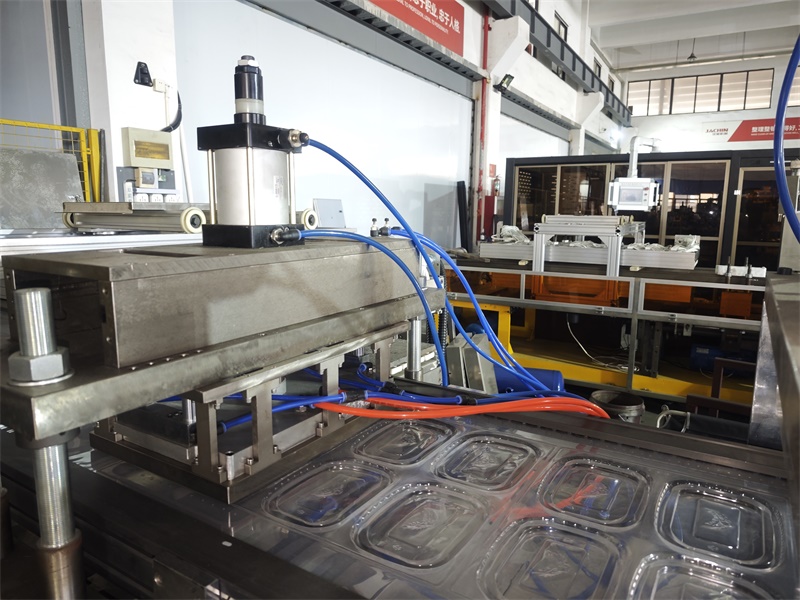
Robotic Stacking Automation Trends Driving Back-End Efficiency
Surge in High-Speed Robotic Integration for Part Removal and Palletizing
Modern thermoforming lines increasingly integrate high-speed robotic systems for part removal and palletizing—delivering measurable labor savings by eliminating manual handling at the end of the line. A 2024 industry analysis found automated palletizing cells can achieve up to 50 cycles per minute, reducing direct labor requirements by three to four operators per shift. Vacuum-based end-of-arm tools precisely pick formed parts from the trim press and stack them on pallets with consistent alignment, cutting scrap rates by minimizing human error during transfer. As cycle speeds rise, robotic responsiveness must keep pace: real-time adjustments to part positioning and stack patterns are essential to sustain throughput. Advanced vision systems allow robots to compensate for slight orientation variations—reducing manual touchpoints—and adapt stacking configurations across diverse product geometries. Amid persistent labor shortages, adoption of these robotic stacking automation trends is projected to grow 12% annually (Packaging World, 2025), improving safety by reducing repetitive strain hazards and boosting uptime by up to 20% (Robotics Business Review, 2024).
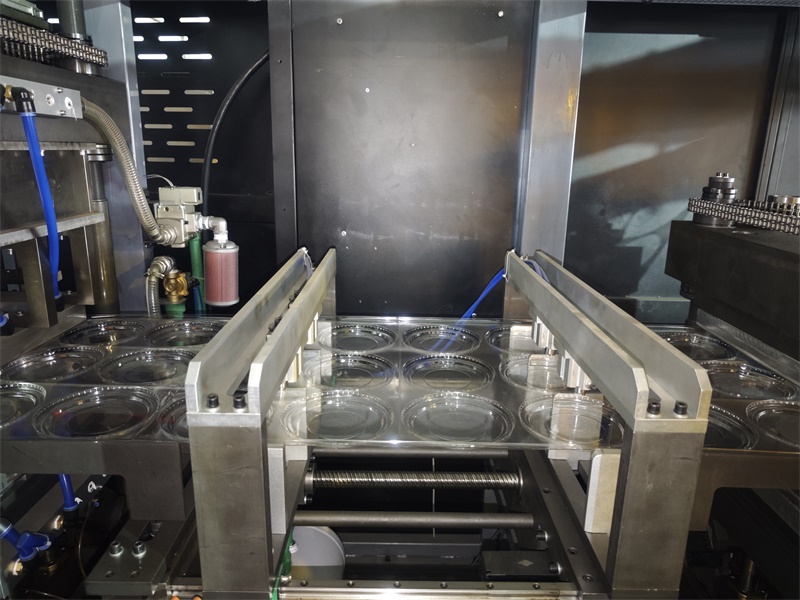
Modular Systems (e.g., Compact High-Speed Units) Enabling Dynamic Adaptability to Cycle Variability
Modular robotic systems—such as compact high-speed Cartesian units—give thermoforming operations the flexibility to tailor stacking to each product’s unique demands. These systems enable dynamic adaptability to real-time cycle variability, a key driver of labor efficiency. With plug-and-play components, changeovers that once required hours now take under 15 minutes. Integrated sensors detect part orientation shifts and automatically adjust stacking patterns—ensuring accuracy without operator intervention. Facilities using modular stacking cells reported a 30% reduction in unplanned downtime (International Federation of Robotics, 2024). The design also supports incremental capacity expansion, aligning capital investment with growth. By maintaining steady throughput despite fluctuations in cycle time, material thickness, or tooling wear, these systems directly strengthen back-end efficiency—and eliminate the need for surge staffing during demand spikes. A case study from a major food packaging line documented a 25% increase in line throughput after deployment (2025), reinforcing their growing role across the thermoforming sector.
Labor Saving Through Automated Material Handling and Palletizing
Shift from Manual Labor to Collaborative Robotic Palletization and Depalletization
Collaborative robots are transforming palletization and depalletization from physically demanding manual tasks into predictable, scalable processes. Robotic arms now handle repetitive lifting, stacking, and unloading—tasks that traditionally required multiple operators per shift. Industry data shows automation reduces direct labor costs by 30–50% (2023 benchmarking report), not only lowering wage expenses but also trimming overtime, recruitment, training, and benefits costs associated with high-turnover logistics roles. Workers previously assigned to back-end material handling can be upskilled into system-operator, quality assurance, or supervisory positions—adding strategic value rather than just physical output. Safety improves significantly: automated stacking removes ergonomic risks linked to heavy lifting and repetitive motion. And because robotic cells operate continuously—across breaks, shift changes, and product variants—they stabilize throughput, smoothing out peaks that otherwise trigger costly temporary labor surges. This shift from muscle to machine redefines the palletizing station as a reliable, always-on node in the thermoforming line.
ROI Framework: Achieving Payback in <14 Months with 2‑Shift Robotic Stacking Deployment
A clear ROI framework confirms robotic stacking as a high-impact, low-risk investment for thermoforming operations running two eight-hour shifts. Labor savings, throughput gains, and reduced downtime typically deliver payback in under 14 months. The table below illustrates typical performance improvements following deployment of a collaborative palletizing system:
| Metric | Before Automation | After Automation |
|---|---|---|
| Pallets handled per hour | 50 | 150 |
| Labor hours per week | 120 | 80 |
| Production downtime | 15 % | 5 % |
| Order‑fulfillment time (days) | 5 | 2 |
A threefold increase in pallet throughput reduces machine dependency per line; a 33% drop in weekly labor hours delivers immediate payroll relief; and downtime falling from 15% to 5% eliminates costly idle periods. Faster order fulfillment—cutting turnaround by three days—improves customer satisfaction and avoids expedited shipping fees. Across roughly 4,000 annual operating hours (two shifts), cumulative net savings routinely exceed the initial capital outlay within 10–14 months. Beyond break-even, the robotic cell continues delivering margin improvement year over year—making it a resilient investment even in variable-demand thermoforming environments.
Bridging the Adaptability Gap in Dynamic Thermoforming Environments
When 'Plug-and-Play' Falls Short: Real-Time Cycle Variability vs. Robotic Responsiveness
Thermoforming lines rarely run at steady-state speeds. Sheet temperature drift, material thinning, and tooling wear introduce real-time cycle variability—challenging pre-programmed robotic stacking cells. “Plug-and-play” automation fails when minor process deviations cause misfeeds, collisions, or stack instability. To bridge this gap, modern solutions embed force-torque feedback and vision-guided path correction, enabling the robot to interpret live process signals and dynamically adjust grasp timing and trajectory. This responsiveness maintains stacking precision even amid ±15% cycle-time fluctuations—directly supporting labor-saving goals in high-mix, high-variability production.
FAQ
What benefits does robotic stacking bring to thermoforming operations?
Robotic stacking reduces labor requirements, minimizes human error, improves safety, and boosts line throughput and efficiency, resulting in lower costs and higher operational reliability.
How do modular robotic systems improve adaptability?
Modular systems enable quick changeovers, dynamic adjustments, and compatibility with variable cycle speeds, driving efficiency and flexibility in production lines.
What kinds of labor costs can be reduced with collaborative robots?
Collaborative robots reduce direct labor expenses like overtime, recruitment, training, and benefits costs, while also reducing risks associated with ergonomic injuries.
How quickly can ROI be achieved from robotic stacking integration?
ROI can typically be achieved in under 14 months, depending on labor savings, throughput improvements, and reduced downtime.
Why is bridging the adaptability gap important in dynamic environments?
Dynamic environments require responsive automation to adjust for real-time cycle variability, maintaining stacking accuracy and preventing inefficiencies caused by misfeeds.
Table of Contents
- Robotic Stacking Automation Trends Driving Back-End Efficiency
- Labor Saving Through Automated Material Handling and Palletizing
- Bridging the Adaptability Gap in Dynamic Thermoforming Environments
-
FAQ
- What benefits does robotic stacking bring to thermoforming operations?
- How do modular robotic systems improve adaptability?
- What kinds of labor costs can be reduced with collaborative robots?
- How quickly can ROI be achieved from robotic stacking integration?
- Why is bridging the adaptability gap important in dynamic environments?