
 EN
EN
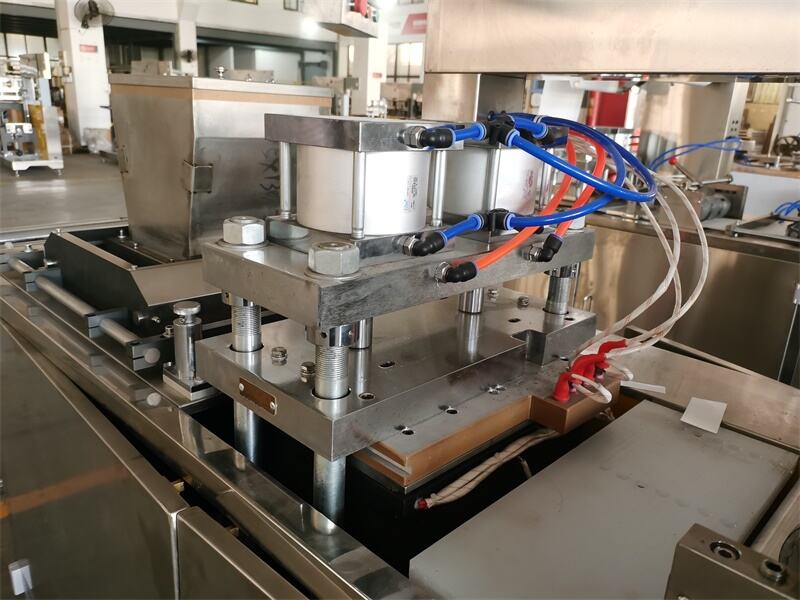
How Warm Pad Making Machine Automation Boosts Yield and Ensures Quality Consistency
Reducing Process Variability Through Precision Thermal and Pressure Control
Automation eliminates human-driven inconsistencies by enforcing exact thermal and pressure parameters throughout every manufacturing cycle. Manual operations introduce variability due to fatigue, technique differences, or inconsistent timing—especially during critical sealing and heating phases. Automated warm pad making machines use closed-loop feedback systems to maintain temperature within ±1°C and deliver uniform pressure across the entire pad surface. This precision prevents defects like uneven heat distribution, delamination, or weak adhesive bonds that undermine performance and safety. Real-time sensors monitor material response and trigger immediate parameter adjustments when deviations occur—removing subjective judgment from the process and ensuring every unit meets identical functional and safety specifications. The result is significantly lower rejection rates and stronger brand trust.
Proven Yield Gains: 22–35% Increase in Heating Patch Production Lines
Facilities that adopt automation report consistent throughput improvements of 22–35% over manual lines—without compromising quality benchmarks. These gains stem from three core advantages: uninterrupted 24/7 operation, near-instantaneous error detection and correction, and optimized material usage. Automated systems reach stable operating conditions faster, cutting start-up waste. With near-zero error rates on repetitive tasks—such as heating element placement, activation layer alignment, and encapsulation—per-unit labor and rework costs drop substantially. Reduced reliance on end-of-line inspections also shortens time-to-market, giving manufacturers a competitive edge in fast-moving therapeutic device markets.
Scaling Output Without Compromise: Warm Pad Making Machine Automation and Production Capacity
Transitioning from Manual Batches to Continuous, High-Throughput Warm Pad Production
Automated warm pad making machines replace stop-start batch processing with seamless, continuous production flows. Integrated feeding mechanisms, real-time quality gates, and synchronized subsystems eliminate downtime between batches—boosting output by an average of 28%, according to 2024 process benchmarking studies. Precise thermal regulation (±1°C) and calibrated pressure control during heating element encapsulation prevent air pockets and cold spots—key failure modes in manual assembly. Standardized cycle rhythms yield 99.1% consistency in heat distribution while operating at three times the throughput speed of manual lines. Labor requirements fall by up to 70%, freeing staff for supervisory, maintenance, and quality assurance roles rather than direct assembly.
Real-Time Monitoring and Adaptive Control for Dynamic Capacity Optimization
Modern warm pad making machines embed intelligent sensors that track over 15 real-time variables—including temperature gradients, adhesive viscosity, conveyor alignment, and ambient humidity. Onboard machine learning algorithms analyze this data to adjust parameters mid-cycle: increasing pressure for thinner substrates, recalibrating heating zones in response to environmental shifts, or modulating feed rates to preserve bond integrity. This proactive control reduces scrap by 19% while sustaining peak throughput. During demand spikes, the system autonomously scales output by up to 40%—optimizing cycle times and material flow without sacrificing consistency. Production managers access live dashboards showing Overall Equipment Effectiveness (OEE), predictive maintenance alerts, and capacity utilization metrics—enabling responsive, data-driven decisions in minutes instead of hours.
Smart Investment: ROI, Operational Simplicity, and Scalable Automation for Warm Pad Facilities
Selecting the Right Warm Pad Making Machine for Small-to-Mid Scale Operations
For facilities producing up to 5,000 units daily, modular warm pad making machines offer the optimal balance of capability, footprint, and scalability. Prioritize systems under 15m² in floor space, equipped with quick-change tooling for rapid product changeovers and built-in quality sensors that flag anomalies before they become defects. Intuitive human-machine interfaces (HMIs) cut operator onboarding time by 30% compared to complex PLC-based controls. Energy efficiency matters too: newer servo-driven models consume 18% less power than legacy hydraulic systems, per International Energy Agency (IEA) 2023 benchmarks. Equally important is vendor support—downtime costs small manufacturers $740/hour on average (Ponemon Institute, 2023)—so verify local service coverage and spare parts availability before purchase.
Balancing Customization Needs Against Payback Period and Long-Term TCO
While fully bespoke automation offers ideal workflow integration, standardized warm pad making machines typically deliver ROI in 12–18 months—nearly half the timeline of custom builds, which often require 24+ months to break even. When calculating Total Cost of Ownership (TCO), account for hidden expenses: specialized maintenance training ($120/hour average), software compatibility upgrades, and long-term obsolescence risk. Facilities that accept minor process adaptations—up to 15%—achieve 22% higher net margins by redirecting customization budgets toward scalable, future-proof automation modules. For non-critical features, consider phased retrofitting after baseline production stabilizes: it lowers initial capital outlay while preserving flexibility for future enhancements.
Frequently Asked Questions (FAQ)
What are the benefits of warm pad making machine automation?
Warm pad making machine automation boosts yield by reducing human errors, maintaining consistent thermal and pressure control, scaling production output, and ensuring uniform product quality. It also reduces scrap and operational costs.
How does automation improve the quality of warm pads?
Automation leverages real-time sensors and closed-loop feedback systems for precise thermal and pressure management, preventing defects such as uneven heat distribution, delamination, or weak adhesive bonds.
What production gains can facilities expect from automation?
Facilities using automated machines typically see production improvements of 22–35%, owing to continuous operation, reduced labor requirements, and near-instantaneous error detection and correction.
How does real-time monitoring benefit production?
Intelligent sensors embedded in automated machines track up to 15 real-time variables, enabling adaptive control and minimizing scrap while optimizing cycle times during demand surges.
Are modular machines ideal for small-scale operations?
Yes, modular machines are recommended for small-scale facilities producing up to 5,000 units per day. They offer scalability, intuitive controls, and energy efficiency, making them cost-effective and operationally simple.
Table of Contents
- How Warm Pad Making Machine Automation Boosts Yield and Ensures Quality Consistency
- Scaling Output Without Compromise: Warm Pad Making Machine Automation and Production Capacity
- Smart Investment: ROI, Operational Simplicity, and Scalable Automation for Warm Pad Facilities
- Frequently Asked Questions (FAQ)