In the global hospitality industry, the demand for disposable hotel slippers continues to rise, driven by the need for hygiene and guest comfort. However, for manufacturers and exporters, meeting the diverse Export Compliancerequirements of internati...
VIEW MORE
For manufacturing leaders in the plastic footwear and thermoforming industry, the decision to move from semi-automatic operations to a Fully Auto Line is rarely just about purchasing new machinery; it is a strategic imperative for survival and growt...
VIEW MORE
Customizing Slipper Sole Patterns: Mold Design Considerations In the competitive footwear industry, Sole Patterns are no longer just aesthetic elements; they are critical functional components that define grip, comfort, and brand identity. For manuf...
VIEW MORE
In high-speed slipper production, thermal stability is no longer a secondary concern. As manufacturers pursue faster output, thinner materials, and more consistent dimensions, cooling systems have become a core part of modern Slipper Making Machine d...
VIEW MORE
Root Causes of Flash and Burrs: Mold Design and Mechanical Integrity Achieving consistent flash prevention and burr removal is a cornerstone of quality assurance in automatic slipper molding. The geometry and integrity of the mold tooling directly ...
VIEW MORE
Injection vs Thermoforming Large Parts Cost Benefit Tooling Cost and Breakeven Volume Analysis For large plastic parts—defined as those exceeding 2 feet by 2 feet—tooling expense is the primary cost driver and key differentiator between...
VIEW MORE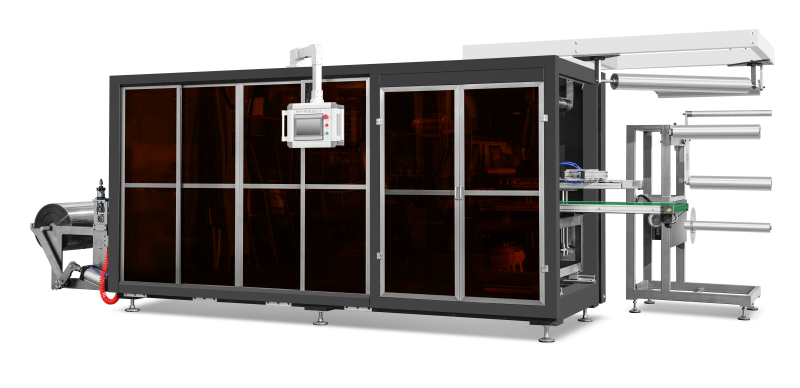
Production Capacity and Cycle Time: How Station Count Directly Drives Output Cycle time fundamentals: Why single-station systems max out at ~1,200 cycles/hour—and how multi-station configurations scale linearly A single-station thermoformer e...
VIEW MORE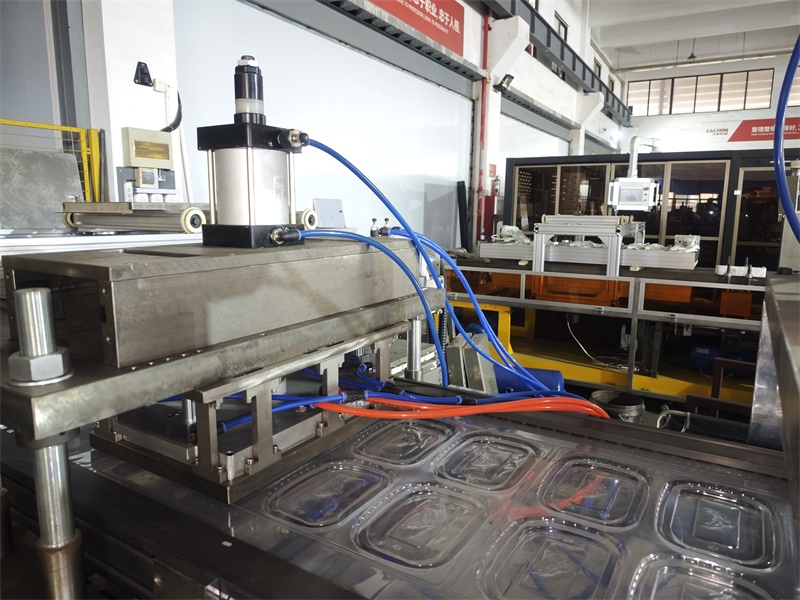
Robotic Stacking Automation Trends Driving Back-End Efficiency Surge in High-Speed Robotic Integration for Part Removal and Palletizing Modern thermoforming lines increasingly integrate high-speed robotic systems for part removal and palletizing&md...
VIEW MORE
Understanding Die Cutting Station Precision Cutting Equipment Matching Why Misaligned Die Cutting Stations Cause >23% Scrap Rate in High-Volume Thermoforming Misalignment between the die and the cutting station’s mechanical bed is a primary d...
VIEW MORE
Understanding Thermoforming Scrap Streams for Effective Scrap Recycling Polymer composition of post-industrial thermoforming scrap (PET, PP, PS, ABS) Post-industrial thermoforming generates skeletal scrap, trim, and rejected parts composed primaril...
VIEW MORE
 EN